







|
Gibraltar is a 'tax haven'
NOT TRUE. Not for the last decade or so, anyway. There's been a determined effort by the government to eliminate 'brass plate-ism', effectively a PO Box address under which non-resident companies and individuals hid income to avoid tax scrutiny in their home countries.
Gibraltar volunteered for IMF reviews – published in 2001 and 2007 – on regulatory and anti-money laundering practice, which fully met international standards.
Having now signed some 18 Tax Information Exchange Agreements (TIEAs) with major countries such as the US, France, Germany and Ireland, Gibraltar in 2009 moved from the OECD 'grey list' of tax havens to the 'white list' of transparent economies.
But that didn't stop the City of London's Global Finance Centres Index report six months later erroneously stating Gibraltar was on the OECD grey list, while Spain still has Gibraltar on its 'black list' of tax haven economies.
Gibraltar is an island, and part of Spain
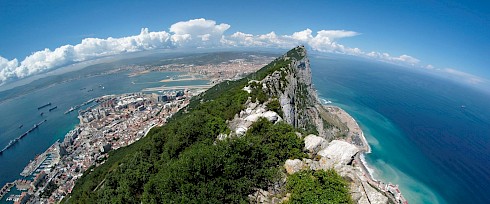
FALSE. Gibraltar is a small land mass of less than 6.5 sq kilometers (2.5 sq miles) strategically located at the southern end of the Iberian Peninsula overlooking the Strait of Gibraltar. Dominated by the 460m-high Rock of Gibraltar, the territory is almost completely surrounded by 12km (7.5 miles) of coastline, but is linked to Spain by a narrow isthmus dissected by the 2,000m airport runway that has the sea at both ends and the Spanish border just over 300m away.
Gibraltar is not an island, nor physically part of Spain. However, Gibraltar was part of Spain before being ceded to Britain in 1713 under the Treaty of Utrecht following the War of the Spanish Succession.
Gibraltar is a military garrison town
NOT ANY MORE. It's true that during the wars of the 18th century between Britain and Spain, Gibraltar was besieged and bombarded for extended periods, but the naval and land attacks were successfully repulsed by a hardy and resourceful British garrison before Gibraltar became a colony in 1830.
During the 19th century the territory became an important base for the British Royal Navy for around 150 years, along with the Army and Royal Air Force that provided the main source of income for the economy, as well as substantial local employment. The dockyard closed in the 1980s and is now a commercial operation, although the Navy continues maintenance work and a facility for nuclear submarines to visit for operational or recreational purposes, and for non-nuclear repairs.
In 1984, nearly two thirds of Gibraltar's economy was military based, but progressively fell to today's 6% and is still falling. There are now some 500 army, navy and air force personnel and MoD land accounts for less than 20% of Gibraltar, although defence remains a UK responsibility.
Gibberish is the official language
NOT TRUE. The rapid and often incoherent chatter overheard between Gibraltarians is mostly unintelligible to visitors, because of the use of English and Spanish-sounding words in the same sentence. Some understandably call it 'Spanglish', but others have even maintained it is the modern-day origin of the term 'gibberish'!
Linguists say it is Yanito or Llanito, an Andalusian-based Creole language incorporating many English, Italian, Hebrew and Maltese words, also drawing on Portuguese and Arabic, reflecting the territory's chequered history.
However, the official language is English, although most inhabitants also speak Spanish after centuries of cross-border connections.
|