







Brazil's largest oil and gas company and one of the largest in the world, Petrobras is positioning itself as one of the most consequential industrial anchors in Latin America. Founded in 1953, the company’s footprint currently extends from offshore production and refining to shipping, fertilisers and lower-carbon fuels. In an interview with The Report Company the company’s president, Magda Chambriard, argued that Petrobras’s scale gives it a decisive role in shaping supply chains, industrial activity and long-term investment opportunities across Brazil.
“When we talk about a company as large as Petrobras, with such broad activity across the national territory, you have to look at the whole ecosystem,” she said. Primarily listed on Brazil’s B3 exchange, Petrobras is also traded on the NYSE, where it is valued at around $120 billion. That market standing, combined with a price-to-earnings ratio of 6.04, reflects its weight both in Brazil and among global energy investors.
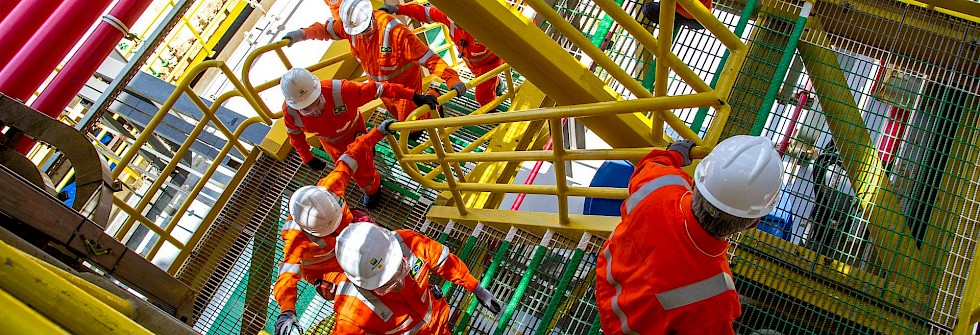
“We do not only produce oil. We refine it, we deliver our product to distributors, we operate waterway and maritime terminals, and we have a fleet of vessels working for us. We have a helicopter fleet, storage tanks, pipelines. In short, this whole ecosystem influences nearly all Brazilian states.”
That scale is especially visible in the state of Rio de Janeiro, where 75% of industrial activity is driven by Petrobras. Across Brazil, the company’s procurement needs create demand for local maintenance, equipment, logistics and industrial services. For Chambriard, that makes domestic industrial development not merely a political aspiration but an operational necessity.

“We do not only produce oil. We refine it, we deliver our product to distributors, we operate waterway and maritime terminals, and we have a fleet of vessels working for us.”
Magda Chambriard President, Petrobras
Post This“These are goods and services that cannot simply be bought abroad,” she stated, explaining that offshore and refining operations require immediate local support. “I need an airport next to my activity. I need a port. I need a pipe yard. I need stock and so on. This type of business creates demand for local content.”
The company’s view is that supporting national development and delivering shareholder value do not have to be in conflict. Petrobras has been restructuring procurement so that large projects are divided into a greater number of packages, widening competition and reducing costs while still supporting Brazilian industry. “If I divide a refinery construction project not into three contracts but into seven, I greatly increase the number of competitors and I bring down the price,” Chambriard explained. “We are using local suppliers in a more optimised way to serve our investors.”
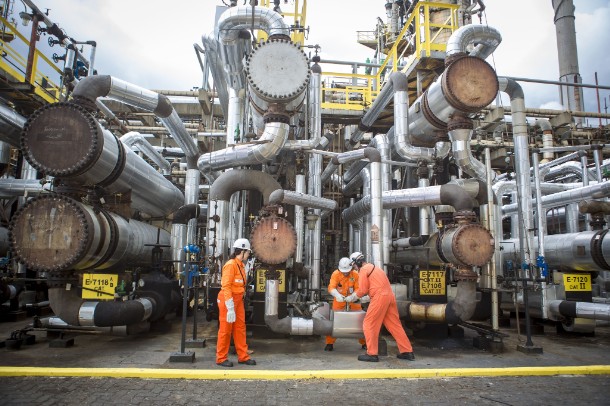
That logic is now feeding into some of Petrobras’s biggest capital projects, from refinery upgrades and expansions, where crude is processed into fuels and other petroleum products, to the maintenance and expansion of offshore platforms used to produce oil and gas at sea. It also extends to the Boaventura complex in Rio de Janeiro, which Petrobras is developing as an integrated hub for gas processing, refining and related industrial activity linked to Brazil’s offshore energy production.
Maritime scale
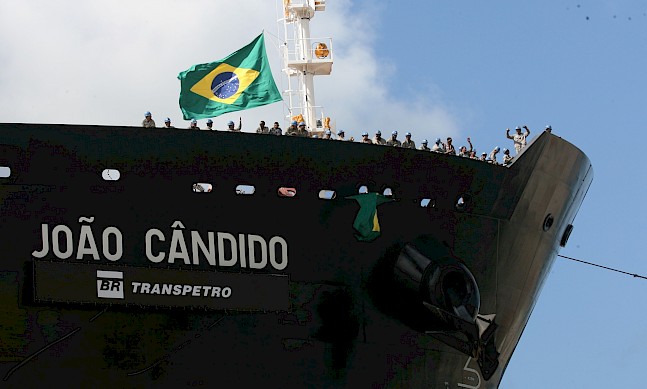
Chambriard also pointed to the breadth of the company’s shipping operations as further example of its industrial reach. Petrobras currently manages a fleet of more than 500 vessels, used to transport crude, derivatives and supplies, and to support offshore production. “In number, not in size, it is a fleet on the scale of COSCO’s,” she said, referencing the major Chinese shipping group.
The comparison is telling. With fleet renewal needs and an ongoing demand for new vessels, Petrobras is focusing on expanding its partnerships, particularly in China. In 2025 alone, the company launched tenders or contracting processes covering 48 vessels. More recently, in an international tender for eight gas carriers, five were contracted in Brazil and three were awarded to a Chinese company.
For Petrobras, that is part of a broader strategy of diversification. “We cannot place all our orders in one state or one shipyard,” Chambriard said. “We have to spread demand across Brazil to reduce risk and ensure delivery capacity.”
China plays a key role in that strategy. Petrobras sees Chinese yards, manufacturers and industrial groups as potential partners not only in shipbuilding, but in equipment supply and joint ventures with Brazilian companies. The company sent a delegation to China last year, during the period of reciprocal state visits by Presidents Luiz Inácio Lula da Silva and Xi Jinping, and returned again this year seeking additional industrial partnerships.
“The mission last year was successful,” said Chambriard. “We secured partnerships for shipyards and shipbuilding, so we were satisfied with the result. This year we went back because we need more partnerships.” The company aims to connect Brazilian industrial assets with financially solid and technically capable partners who can help expand supply capacity from within Brazil. At the centre of Petrobras’s pitch is the idea that Brazil offers a substantial industrial base that can be modernised, recapitalised or paired with foreign technology and investment.
Fertilisers and agribusiness
That logic is exemplified in fertilisers, an industry where Petrobras’s investment in increasing gas supply has boosted viability. “When I arrived at Petrobras, there was a view that fertiliser was uneconomic because gas in Brazil was still too expensive,” Chambriard explained. “That raised the real question: why is gas expensive? It is supply and demand. The only way to lower prices is to invest in producing more.”
“Brazil has a great deal of installed infrastructure that can be optimised, through technology, investment, process optimisation or all three.”
Magda Chambriard President, Petrobras
Post ThisPetrobras has raised estimated capacity on Brazil’s three pre-salt gas export routes from 44 million cubic metres a day to 52 million, with a target of 68 million. That has helped make fertiliser plants more viable. Two existing plants and a third using asphalt residue together account for 20% of all nitrogen fertiliser Brazil consumes. A fourth plant in Mato Grosso do Sul is under construction and could raise that share to 35%.
“Brazil has a great deal of installed infrastructure that can be optimised, through technology, investment, process optimisation or all three,” said Chambriard. “That is a major opportunity, and it is exactly what I would like Chinese investors to look at more closely.”
Biofuels and sustainability
Petrobras is also trying to frame its future in terms broader than oil alone, balancing national energy security with environmental responsibility. The company supplies close to 31% of Brazil’s primary energy, a leadership role it has used to spur uptake of biofuels and lower-carbon products. Chambriard highlighted Brazil’s flex-fuel fleet as a distinctive national advantage and emphasised Petrobras’s influence in expanding the use of ethanol, biodiesel, co-processed diesel and sustainable aviation fuel. “We are advancing very quickly on these issues, but with a great deal of responsibility,” she explained. “We need this to be done with firm, consistent and irreversible steps.”
With energy and agriculture the two pillars of Brazil’s exports, Chambriard sees fertile ground for the wider Brazil-China relationship, arguing that the partnership can serve both countries’ strategic priorities. “In 2010 I received a Chinese delegation and even then, the discussion centred on food and energy security,” she said. “Brazil can contribute directly to both. That creates a very strong foundation for partnerships.”