







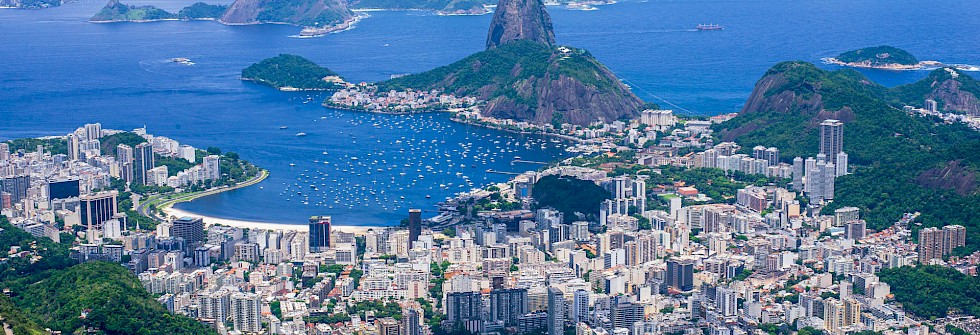
Few cities match Rio de Janeiro’s global recognition. Fewer still combine it with an investment strategy tailored to Chinese capital. Invest.Rio is turning that recognition into commercial opportunities, positioning the city as a platform for investment in tourism, technology, energy and real estate. In this interview, President Sidney Levy explains how these priority sectors and closer ties with China are shaping the city’s investment strategy.
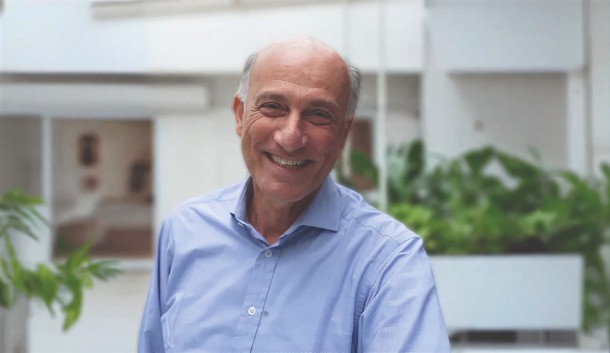
“We are especially determined to strengthen Rio de Janeiro’s relations with China.”
Sidney Levy President Invest.Rio
Post ThisQ: How is Invest.Rio turning global prominence into investment?
Sidney Levy, President of Invest.Rio: We carried out strategic planning at the beginning of last year to define which areas we want to encourage, where we need to invest state capital so that things can gain momentum. We defined four priority areas: tourism, the tourism business itself; technology; real estate; and energy.
We are going to work and put our focus on those four areas of the economy. Tourism is the only business in Rio de Janeiro that can double in four years. We have 2 million foreign tourists this year and we could easily have 4 million. Cancún, for example, has 10 million. So, it is reasonable to target doubling the tourism business.
Tourism employs a lot of people. To double the tourism business in four years, we have three areas: air connectivity, hospitality and what we call the calendar. The calendar is what the person will do here. Air connectivity is how the person will get here. Hospitality is where the person will stay. And then what the person will do here.
Q: How is Rio expanding its hospitality capacity?
SL: In hospitality, we developed two projects. The first project was regarding six closed hotels in Rio de Janeiro, because of partner disputes and other issues of this nature. So, we carried out proactive work with those owners so that they would sell. That has been submitted and completed. There are no more hotels left. Now all the hotels in Rio de Janeiro that were closed will open in the coming years, under new ownership.
There is the Four Seasons. The Four Seasons on Leblon Beach, which was an old hotel, Hotel Marina, which has been closed for many years. There is a hotel on Rua Fábio de Almeida, which was Praia de Ipanema, which had been closed for many years. It will belong to an LGBT chain called Trieste. There is the Sofitel, which had been closed for many years and will open in October. BTG owns the building and CORE is the hotel manager.
At the same time, there was a relaxation of the rules for studios, because with the Airbnb industry, studios are very important. There are many investors who have put a lot of money into these studios because they will place them on Airbnb platforms and, naturally, you increase the supply of rooms for people to stay in. The industry is putting a lot of investment here and we are very happy.
Q: How are connectivity and events accelerating tourism growth?
SL: On air connectivity, we worked on the recovery of Galeão Airport, a very successful political movement, and last month we managed to sign a programme with Gol to make it its international hub. Gol will travel outside Brazil. It will start with four flights to New York. The city hall will help Gol by granting its incentives. And we are in negotiations with several airlines from various countries around the world to complete Rio de Janeiro’s connection network.
And the third point, which is the calendar issue, is where Rio de Janeiro is putting on a show. Today we have Fashion Week, there is the International Conference of Software Engineers in Barra, and so on. Next week there is Shakira. There is a lot, a lot, a lot going on. We are having things day after day, practically every week. Now in June there is Web Summit.
This is a capital attraction strategy. The company doing Fashion Week is an Arab company, so that is capital coming in. There was SailGP last week, another Mubadala company. So, there is a lot of capital coming into tourism, because it really is a business that will double in four years.
Q: How are global partnerships advancing Rio’s technology ambitions?
SL: We have strengthened ties with the Emirates and with Qatar. Qatar has specific interests in Rio de Janeiro. They have $1 trillion invested outside Qatar. In Brazil, $5 billion. That is very little. It could be $80 billion. Most of it is in Rio.
So, we are now moving to the second hub, which is the technology hub. We do a complete analysis of the situation and really believe — and we also spoke a lot with the Arabs — that the entry of artificial intelligence into the world is a very profound change and that it will extend over many years. For a place like Rio, it is a unique chance to leapfrog, to make a jump, because these rules are going to transform profoundly.
There is a thesis from a Chinese economist who lives in Abu Dhabi. He believes there will only be 15 global cities in the world. And these are the cities that will attract AI talent. These cities need to have a good place to live, abundant energy and connections between them, because then it is not one city versus another. In South America, he thinks there will only be two, and that it will not be São Paulo. São Paulo has no energy. It cannot supply its own energy.
Q: What makes Rio competitive for major AI infrastructure?
SL: We ended up attracting Goldman Sachs, a Rio operator called ELE, and we are in advanced negotiations with a hyperscaler. And we are in advanced talks with one of those four to build opposite the Olympic Park, where we already had surplus energy because of the Olympics.
Because when you host the Olympics, the American NBC requires very special treatment of the energy side. When you consider it, NBC pays a fortune, $1 billion. But it requires a series of tests. We had to do that. So, that energy is already there.
We have the thesis that when you put in this capacity of 1.5 GB, which is an enormous amount of processing, we have adjusted a very large plot of land opposite the Olympic Park, adjusted the main regulation, the access to the substation, the submarine internet cable that comes here — from Pernambuco it comes here — so we completed that connection to the Olympic Park, which is also very close to the water. So we have already put all this together and are only waiting for Redata to announce a major hyperscaler and the largest investment in Rio de Janeiro in the last 20 years.
Q: How is BYD supporting Rio’s autonomous vehicle ecosystem?
SL: Still in the technology area, we developed this with this group, and with the Chinese from BYD we developed the autonomous car project. They must test the autonomous car under local conditions, otherwise they cannot carry out the tests. They have something called an Experience Centre, which is a 200,000-square-metre facility with sand, water, curves and stones. It is enormous. They are going to build one here.
We already have the land; we already have a signed protocol. So, we are going to build 200,000 square metres there, on that access road to Galeão. We are going to build the Chinese data centre there to process this and the research centre for the engineers who will do it. There is something with radar, there is a whole system.
When you have major processing capacity, companies emerge around it to exploit that professional capacity, to carry out the tests.
Q: How is Rio developing the talent needed for AI?
SL: The city is buying an NVIDIA computer to put here in Maravalli, which is our hub, and it is training 100 mathematics professionals every year at IMPA, which is also nearby. That is the formation of our AI ecosystem, which we hope will be because an autonomous car is nothing more than a robot. The hardware already exists. The hardware is ready. You must make the software, which is very complicated. So, the second area we are very excited about is technology.
Q: Why should Chinese investors choose Rio de Janeiro now?
SL: Rio de Janeiro has two competitive advantages in its relationship with China. The first is this: Rio de Janeiro has administrative continuity. I became mayor, he became mayor, the mayor has a candidate for governor. Not every place in Brazil can say that. And here we have administrative quality because he was mayor for four terms. So, a way of working has been created that is a competitive advantage for Rio de Janeiro.
The second competitive advantage is that we have the only city mayor in Brazil who lived in China for a year. He lived in China for a year, knows Mandarin, loves China, knows China from top to bottom, travelled all over China. We have received many Chinese here. We are now at the opening of — we have an agreement with the Zhengzhou Economic Zone and we are trying to bring Chinese airlines here to operate the flight. It is a priority for Rio de Janeiro.
The Chinese bank is here. Hong Kong is here in this building. The Chinese Commercial Bank is here in this building. Our priority is stimulating this, and we want to create a pact with the 100 leading Chinese companies. We are especially determined to strengthen Rio de Janeiro’s relations with China.