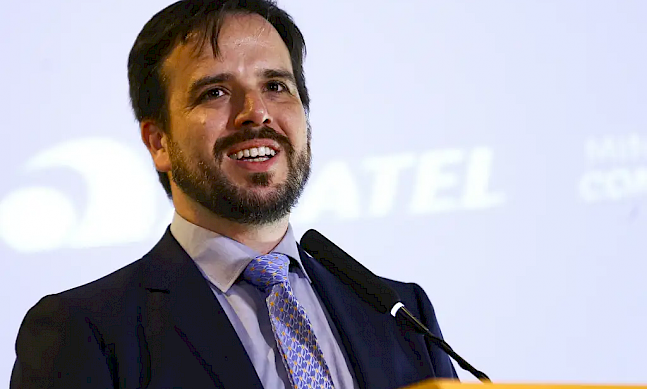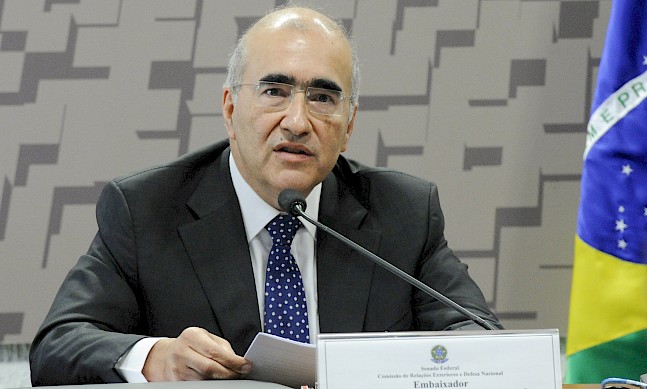








Brazil’s Ministry of Transport has developed a more predictable model for infrastructure concessions, with standardised contracts and a clearer pipeline for global capital. That comes as Brazil tries to match the scale of its export economy with a logistics network able to carry it, with production spreading beyond the country’s traditional industrial areas into new agricultural corridors. Meanwhile, as pressure on infrastructure intensifies, investment in ports, roads and multimodal links becomes a priority. In response, Minister George Santoro points to a 2050 National Logistics Plan and almost R$180 billion forecasted for road investment in 2026 alone. In this interview, he explains why the government views this as a turning point for Brazilian infrastructure and why stronger international partnerships now matter more than ever.

“For the first time, the government is adopting a public policy of covering the economic viability gap in railway projects.”
George Santoro Executive Secretary of the Ministry of Transport
Post ThisQ: How has Brazil changed its concession model?
We began this cycle in 2023 in a very consistent way, which was by changing the design of our contracts, improving the regulatory side and the risk matrix. In practice, we aligned everything with international best practice in infrastructure concessions. Today, when you talk about one of our projects, you will find all the principles and rules adopted by the OECD, which makes us eligible for any international investment fund.
Q: What has the ministry delivered to date?
We announced the pipeline in 2023 and have been delivering it year after year. We have already held 22 auctions, and if you look at Brazil’s history, I have already contracted more than in the previous 35 years of highway concessions, just in roads, for example. So that created credibility and predictability.
In the past, I had 26 concession contracts, and there were 26 different tender notices, 26 different contracts, 26 different structures. Today I have a single standard. So, everyone in the market already knows what my project will look like. The contractual clauses are the same.
Q: How does this strategy alter Brazil’s map?
For the first time, Brazil will have a logistics plan running to 2050, a 25-year plan that is very realistic. Brazil has moved away from the concentration in São Paulo, Paraná, Rio de Janeiro and Minas Gerais and spread into Matopiba (Maranhão, Tocantins, Piauí and Bahia), Mato Grosso and several new areas. I had to redesign export logistics corridors in response to an enormous challenge, because 30 years ago Brazil exported 6 million tonnes of food. We finished 2025 with more than 200 million tonnes of food exports, excluding minerals and everything else.
Q: How is Brazil engaging with Chinese investors?
We are trying to do all of this to improve the competitiveness of our products in the international market. For example, we begin by speaking with the embassies here in Brazil. Through diplomatic channels, we bring in interested parties from each country. We built that strategy step by step, and it worked very well.
With China, we have been holding meetings for two years. We signed the memorandum of understanding with the government when President Lula went there. The Chinese government sent more than 200 technicians to discuss the projects in our pipeline. Today, I am certain that their transport infrastructure body has full knowledge of our projects, and they give the green light to Chinese companies.
Q: What is the biggest opportunity in transport today?
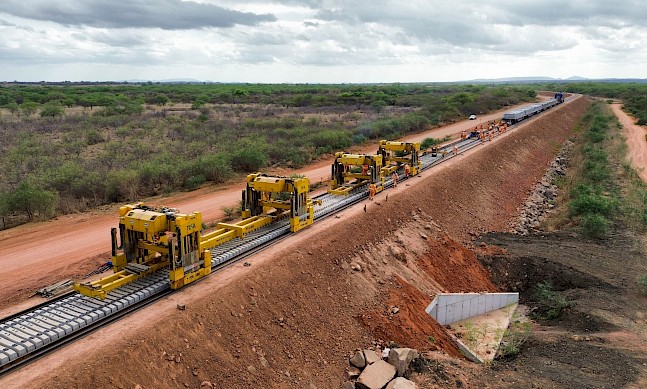
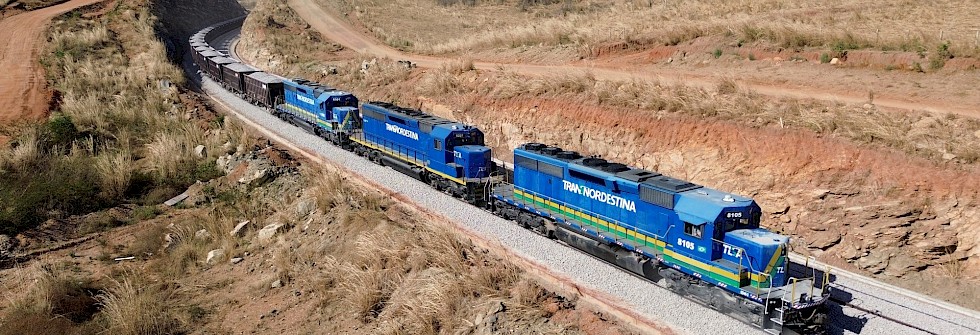
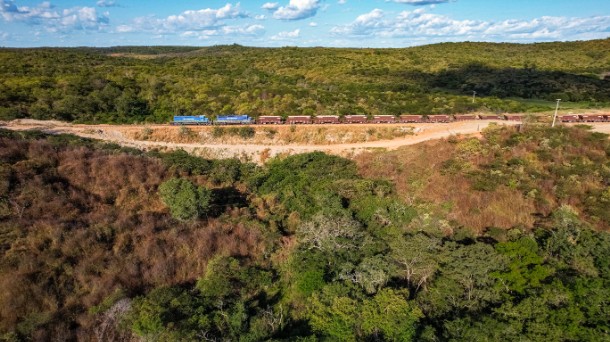
I think railway projects are an opportunity because today the rail market in Brazil is vertically integrated, and I am opening the possibility of vertical integration in a different way. What does vertical integration mean in rail today? Whoever owns the railway carries their own cargo. So, when I open things up and create connectivity to ports, I create the opportunity to generate competition in a sector linked to Brazilian exports, which are growing every year.
We are presenting a greenfield rail pipeline. This pipeline is an opportunity. For the first time, the government is adopting a public policy of covering the economic viability gap in railway projects. That has never happened in Brazil before, but it is done in Australia, in Europe, in the United States. I do not know of any major strategic railway case in which the government does not participate in covering the viability gap. I think railway projects are a major opportunity because today we have very few players in Brazil.
Q: How is institutional maturity supporting this?
In 35-year or 60-year contracts, a dynamic economy will have challenges. So, these consensual solutions that we built with the Federal Court of Accounts, and consensual solutions within the regulatory agency and the Attorney General’s Office, made it possible for us to rebalance those contracts in a very transparent and correct way. That had a very positive impact on investors. I think that is a point of institutional maturity that Brazil has built in recent years, and it removes risk for those investing.
Q: How are sustainability and innovation shaping this infrastructure pipeline?
All our projects have specific budget allocations for the energy transition, aligned with the rules of all investment funds, and we are applying all the ESG rules we have required.
In technology, we are moving towards free flow, encouraging the use of AI, encouraging the use of solutions that reduce costs and cut carbon emissions. In all projects we are giving investors the freedom to present those innovations.