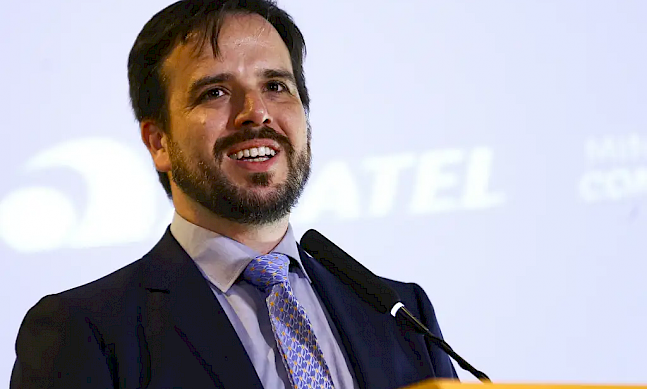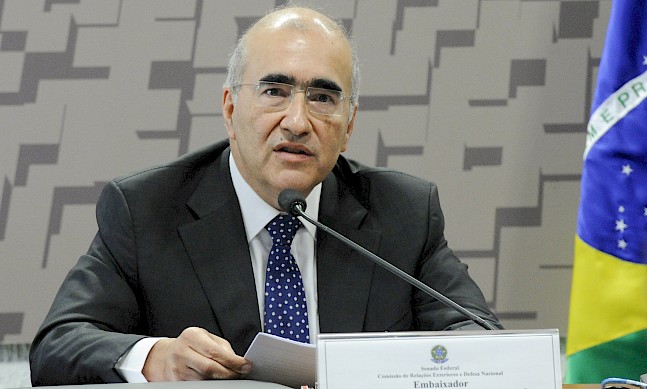








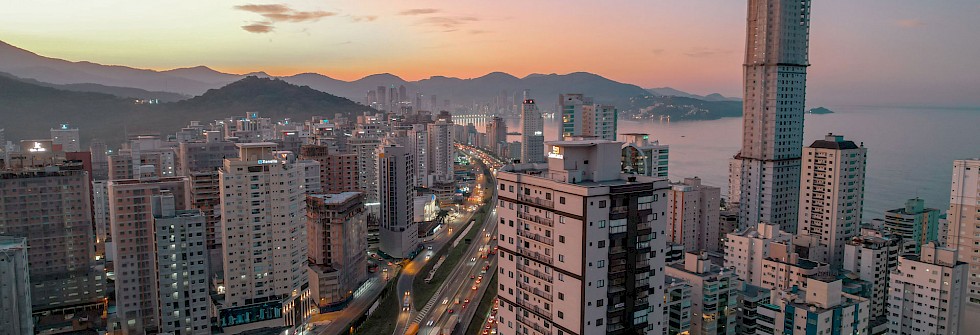
As Santa Catarina builds on its logistics strength, industrial base and competitive business environment, InvestSC is adopting a more strategic approach to investment attraction. In this interview, Renato Dias Marques de Lacerda, former president of InvestSC, explains how international offices, infrastructure projects and closer ties with China are boosting the state’s global profile.
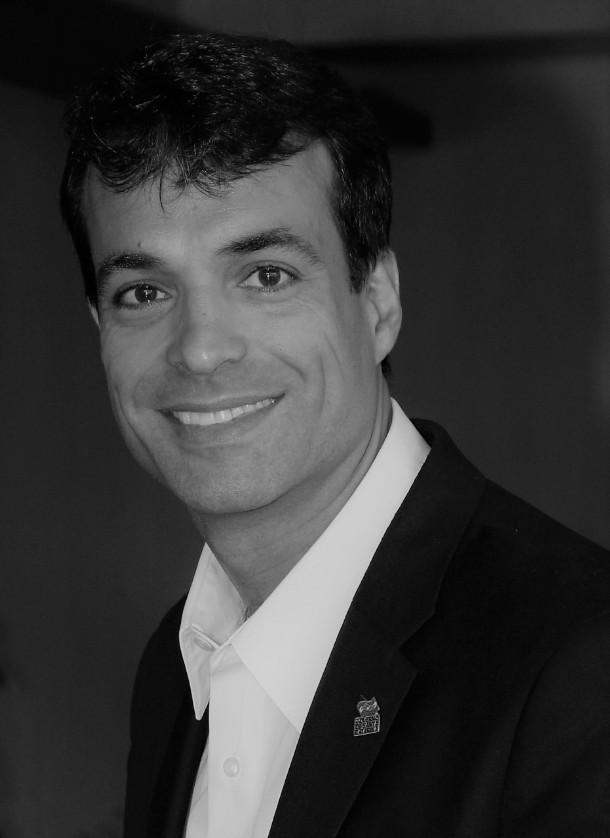
“Santa Catarina’s GDP linked to technology has already surpassed 8%. We are the Silicon Island”
Renato Dias Marques de Lacerda Former President, InvestSC
Post ThisQ: How can you harness Santa Catarina’s economic momentum?
Renato Dias Marques de Lacerda, Former President, InvestSC: The first thing is to start organising. Santa Catarina already has a very high level of demand. I have been working in investment attraction for around 15 years, but through the Treasury, in the area of tax incentives and tax benefits. It was always the state bringing its areas together and organising service in a reactive way. It depends on which window the investor comes through. Sometimes he comes in through the city hall, and the mayor brings him to the state. Sometimes it is a deputy from a region or sector. Sometimes it is a businessperson, a local private partner, which is very common in the Chinese case. There is already a local partner who has started importing, or a distributor, and the company grows in the market and says: “It is time for us to think about a plant.” Then the private partner brings the question: “How do I enter the state? I know someone at the Secretariat for Development, the Secretariat for Industry or the Secretariat for International Affairs.”
If we simply kept serving that reactive demand forever, I do not think we would manage it, because many structures do that given the volume there is. After Santa Catarina implemented its tax incentive programmes, which are robust, I think that is what projected Santa Catarina in this scenario, especially in the logistics sector, with tax incentives in the 2010s in particular. The industry incentive is older, around 35 or 36 years old, and those linked to imports are more recent, around 10 to 15 years old. That was when it really began to gain momentum.
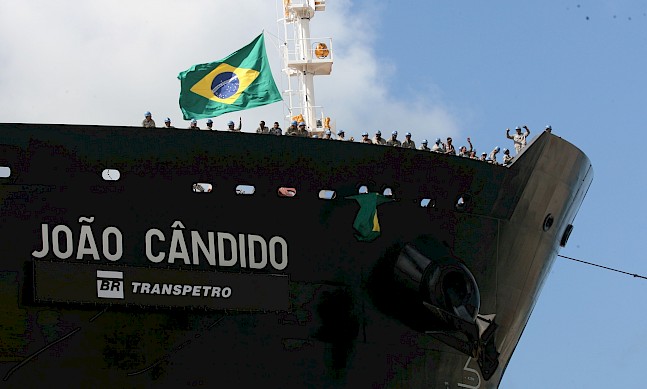
Santa Catarina today has six ports. Counting the fishing port of Laguna, we have six ports and two more private ports in the final licensing stage. I think that in two years we will have eight ports, probably the state with the largest number of ports in the country, and there are many investments in this area. That naturally brings us very high demand. But not only that. We now need to start qualifying the investment.
With the creation of InvestSC, we have already begun to prioritise service a little. Of course, we provide all the support that is needed, but the Treasury Secretariat here has been fully automated for many years. Any taxpayer who needs guidance in Santa Catarina already has a professional providing services to them. Santa Catarina is very fast in this respect. In the business environment, our commercial registry issues a CNPJ in less than 24 hours, and state registration is also very fast. Once you have the state registration, the Treasury system is online. You open it and there is a menu, a scrolling bar that goes on and on, with around 300 types of tax incentives. You apply and select.
Of course, with support, you are more accurate. A foreigner without support may get lost even within that menu. That is where we come in. We say: “You have this activity, you are going to import, you are going to export, you are in this place, there is an incentive in this region.” So we organise that for them and deliver a sector study, a notebook of incentives applied to the economic sector in which they will operate.
We also do site location work. We talk to the city hall. What region do you want? Do you not have a region? “I want to work with logistics and my supplier is in a certain place, but I am going to export.” So we help them choose when they do not yet have a reference. Sometimes they want to be closer to the supplier, sometimes they want to be closer to the coast. If there is no preference, we look for where land is cheaper, obviously. In a good sense, we end up influencing the decision because, although we are a state-owned company and our legal configuration is a little different from other “Invests”, we also develop an activity of promotion and development for the state. If the taxpayer is not sure where they want to go, we help direct them towards where there are better conditions and also where the state wants to develop.
We have been developing Investe Santa Catarina with this format for two years, since January 2024. The company has existed for 20 years, but it was much more linked to the state’s participation in investments and perhaps public-private partnerships. We gave it a strategic shift. Today we work with FDI. We have an area for serving and seeking FDI. And we have another area of the company that works more on attracting investment for infrastructure.
In Brazil, we are the only agency — I call it an agency in a global sense, as an institution, because FDI terminology uses IPA, Investment Promotion Agency — that works with both FDI and public-private partnerships and concessions. We support the state, and eventually some municipalities that come to us, in structuring these projects that demand investment focused on infrastructure. It is an investment in the public interest, but it can be carried out with private capital at the end point and becomes a business for the partner.
We carry out the structuring and already indicate, for example, that if you enter a particular concession project, there is an estimated return rate of 11% over 30 years. We help structure it, help the state or municipality launch the tender and then we run to do the roadshow and look for investors.
Q: How have you worked proactively to bring greater international visibility to the state?
RDML: We started by doing some roadshows, which we call SC Day, Santa Catarina Day. We first did them in São Paulo. We have already done them at B3. Whenever we have a project and are doing a project roadshow, it ends up becoming a roadshow for the state. For example, we held two auctions at B3 and used them to do a roadshow for the state.
We have also done events for specific audiences, for funds and financial institutions. Then we also began making some trips, international missions with the governor and secretaries. In the past two years, for example, we have been in the United Arab Emirates, in Dubai and Abu Dhabi. We did one in New York during Brazil Week. We were in Japan, we did Japan, China, and a month ago we did Bern, in Switzerland, in partnership with the agency in Berlin. We have done Panama and Argentina.
We go according to the opportunities. In Argentina, for example, it was a fair focused on tourism, so we had some tourism projects and used the opportunity to sell the whole state within that niche. Opportunities arise and we go. More effectively now, after last year’s international mission to Asia with the governor and some secretaries, where we went to open markets for meat, among other things, we concluded that Asia is a market that deserves more of our time.
Santa Catarina is a small state, but we have the highest life expectancy in Brazil. We have the best public security in Brazil. We are also well positioned in the CLP state competitiveness ranking. We came seventh, then climbed almost one place a year: seventh, sixth, fifth, fourth, third, second. We reached second place as the second most competitive state in Brazil. We have held that position for eight years.
That index is composed of several criteria and groups of indicators, and we lead in some of them. For example, in terms of public security, we have been Brazil’s safest state for 10 years. In human capital, quality of public administration and several other indicators, we are also well positioned, among the top three. Last year we even slightly narrowed the gap with São Paulo, but we know that São Paulo is practically a country of its own. The very fact that we are in second place already makes us consider ourselves first.
Within this context, including tax reform, where taxation will be on consumption and tax incentives will decline, many companies will want to be close to the consumer market. So it is natural that we will have difficulty beating São Paulo in every FDI opportunity we compete for. But we have been in this position for eight years and leading in several areas.
We take that abroad. With this logistics structure, we are the second-largest importing state in the country. We are the sixth-largest exporting state, if I am not mistaken, and the second-largest importing state. Much of what comes in ends up going to other states. We have reports of ships entering the queue in Santos, diverting here, clearing customs and the cargo arriving earlier than it would have arrived through Santos. We have efficiency in the system here and tax incentives, and that is why we reached this position as the second-largest importing state in the country.
In the past 12 months, 45% or 46% of everything we imported came from China. A good part of what comes from China is inputs and materials for our industries. That shows how strategic China is for us.
Having said that, the strategy we adopted when we returned from Asia was that the governor determined we should start working on opening two international offices. We already have the two offices open in China. We opened the office in Shanghai, at the Brazil Center. The Brazil Center is a cooperation between the Brazilian Consulate there and ApexBrasil. We opened the office two months ago. I have already been there and we will have a colleague based there full time. We are expatriating her this month, in March. There is a lot of demand from companies that already export to Brazil. When they think of Brazil, they naturally end up going there because we are already in that environment.
Investe Mato Grosso is also there. Investe Piauí is going there. Investe Minas is also considering a room. We have a port from Santa Catarina, the port of Itapoá, which has already rented the room next to ours. A Brazil ecosystem is being created and we are already part of it. With that, we can support companies from here to there and from there to here.