







Brazil’s relationship with China is expanding beyond record trade flows into investment, industrial partnerships and infrastructure. For João Doria, João Doria, former Governor of the State of São Paulo and CEO of LIDE Group, the opportunities now stretch from food security and clean energy to pharmaceuticals, logistics and mineral development. In this interview, Doria outlines the sectors and relationships that can drive the next phase of bilateral investment.
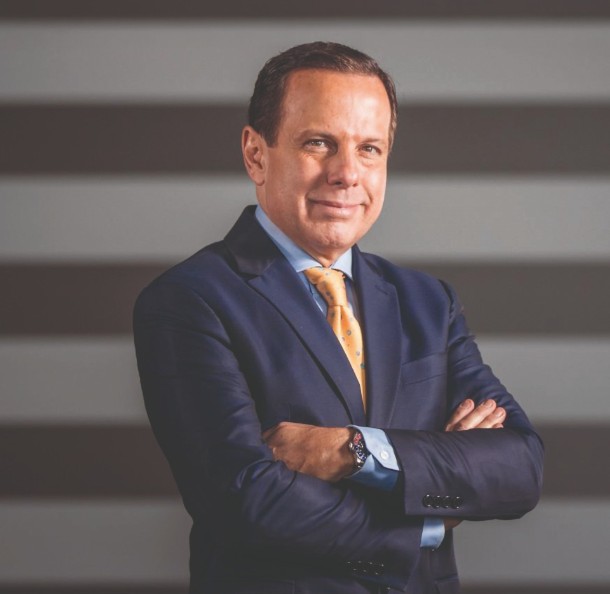
“I would look at two sectors as priorities: the food security sector and the energy transition.””
João Doria former Governor of the State of São Paulo and CEO of LIDE Group
Post ThisQ: How has the Brazil-China economic relationship evolved?
João Doria, CEO, Grupo LIDE: China is already Brazil’s main trading partner, as it is the main trading partner of the State of São Paulo, a state that today accounts for 38% of the Brazilian economy, which runs here in the State of São Paulo. But we have more than 200,000 Chinese people residing in São Paulo, there are more than 220 Chinese companies from different areas of activity in São Paulo alone. So, there is already a structured relationship with a history over, especially, the last 20 years. It is not old, it is recent, but it is intense and has been growing even more.
In several sectors: technology, the automotive industry, infrastructure, civil construction, the cosmetics sector, the laboratory sector, services in general. The Chinese are major investors today here in Brazil in several areas. Today, unless I am mistaken, there are already 22 Chinese vehicle brands being sold here in Brazil, and the main one, BYD, already has the factory in Camaçari, in Bahia, generating jobs for Brazilians and producing electric vehicles at competitive prices for the Brazilian market.
Q: Can Brazil become China’s Latin American operations hub?
JD: In fact, this is already happening. What will happen is an expansion in this relationship. Today Chinese investments here in Brazil are substantive, they are multiple. Generating employment, generating opportunity, generating taxes, contributing to regional and national economic development.
What does not exist is the reverse, that is, Brazilian investments in China are small and at this moment are determined for some specific areas of the economy. Investments from here in China are still, I would say, sparse. As the country needs more infrastructure and more logistics to move its production, more opportunities for investment from China may materialise here.
Q: Where can Brazilian companies find opportunities in China?
JD: Food security, without any doubt, is by far the greatest opportunity. The Chinese are already the largest importers of commodities from Brazil, by far, far ahead of the United States of America, even before President Trump’s tariff hike. And our possibility is to expand this participation even further, which is already happening.
Brazil, as a result of research and technology, has greatly expanded its agricultural production over the last 10 years. Brazil today is a champion. Brazil has expanded its production and year after year has been breaking records in grain production, specifically here in the grain area. This owes a lot to technology, research, the agronomic institutes here in São Paulo, Embrapa, which is a reference in research, has more than 2,000 researchers who contribute to the Brazilian agricultural sector. So Brazil has been, let us say, the reference point for China’s food security, which makes us happy, because this is an intense, deep and fair relationship.
Q: Which industrial partnerships offer the greatest bilateral potential?
JD: We are still timid in this area, in truth, but already, I would say, the first understandings are being formalised, but yes, that possibility exists. I have no doubt that the Brazilian business community is willing to accept these investments, to form joint ventures with Chinese investors, whether state-owned or even private.
There is another sector where Brazil can evolve a great deal in its relationship with China, which is the pharma sector, in the production of medicines and vaccines. China has greatly evolved its technology in this area. Brazil has technology and has good laboratories too. This is a sector where Brazil is a reference and can expand operational agreements and production agreements. I, as governor of São Paulo, made an agreement between the centenary Butantan Institute, Butantan has 118 years of history, and Sinovac, a private laboratory based in Beijing, to produce vaccines. Certainly, other agreements in this period must already have been made and many new agreements may be carried out.
Q: Where can China accelerate Brazil’s energy transition?
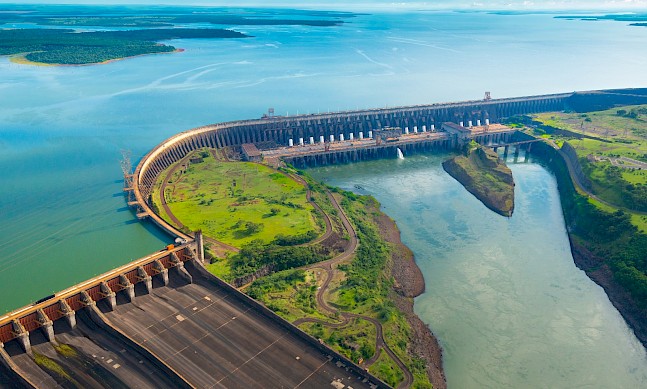
JD: Brazil has the cleanest matrices, the cleanest energy matrices in the world are in Brazil. In this area of energy transition there were indeed advances. And there were advances because Brazil has clean energy matrices.
Yes, we can expand Chinese investments in green hydrogen, in wind energy, not only on territory, on land, mainly in the North and Northeast regions, more specifically in the Northeast region, but also in other regions of the country. Very soon also ocean energy, which is another form of energy transition, with the formidable coastline that Brazil has and the possibility of seeking in the Atlantic Ocean another source of clean energy for the country and even to export clean energy from Brazil. If I were a Chinese investor, I would look at two sectors as priorities: the food security sector and the energy transition sector.
Q: How does LIDE turn bilateral dialogue into investment?
JD: By doing what we are already doing, taking missions of Brazilian companies to China and bringing missions of businesspeople and also representatives of the Chinese state to Brazil. This is the way for you to create real opportunities. The Chinese like personal contact. They are not fond of virtual contact. They like to look people in the eye, talk, dialogue and, in a way, even celebrate the meeting between people. Which is not different from the Brazilian spirit, by the way.
We are neither Nordic nor Anglo-Saxon, nothing against Anglo-Saxons or Nordics, but we like to be close, to dialogue, to talk, to embrace, to kiss, to smile, in a way to celebrate our meetings. So I would say that the more bilateral meetings we hold and business missions from China to Brazil and from Brazil to China, the more results we will have.
Q: Can Brazil and China collaborate on critical minerals?
JD: This is a slightly more complex area. And why? China has the largest reserve of rare minerals, rare earths in the world, and the second country in rare earths is Brazil. In other words, in this case, we are in a way competitors. This is a raw material of great value and will increasingly be of extraordinary value for nations that have this possibility.
China exploits rare earths more and better than Brazil, but we may have opportunities here, safeguarding Brazilian conditions and legislation, for joint ventures or Chinese capital to finance Brazilian companies in mineral exploration and also expand the exploration of rare minerals. China has large consumption, the expansion in iron ore alone, even with it being a large producer, it imports iron ore here from Brazil, mainly through Vale and also Gerdau.
Q: What would make Brazil more attractive to investors?
JD: Brazil is a safe harbour, it could be more so, if we perhaps had more efficiency in government management, Brazil could be even more attractive than it already is and also offer greater legal certainty. In fact, the only point that sometimes limits international investments here in Brazil is not the local political, party-political, ideological issue. Large investors do not look at that, not least because there are political problems in every country, everywhere. In some there are even armed conflicts. But legal uncertainty scares investors and sometimes here, for ideological, political reasons, legal certainty is threatened. If I had to make a recommendation, if I could, I would say to Brazil: guarantee legal certainty and external investments will expand even further.
Q: Which projects should Chinese investors prioritise in Brazil?
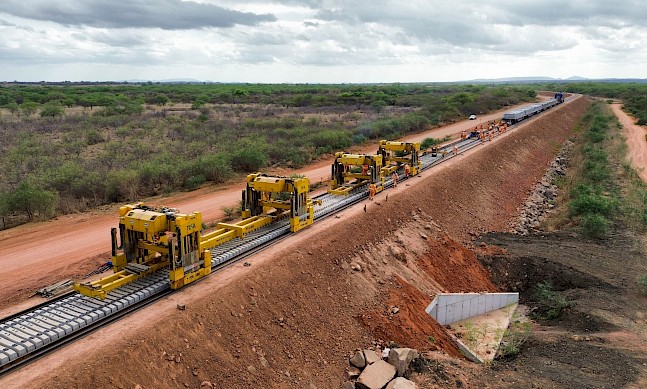
JD: Infrastructure, Brazil needs more logistics infrastructure. So we need more roads, more railways, more waterways, more airports, more ports, if possible modernised, distant from state control, with efficient private management, attuned to the market. The agricultural sector, for example, needs strong investments in depots, in warehouses. Brazil produces more than its storage capacity.
This is a great opportunity for Chinese investors, especially with the technology that China has in civil construction and in the construction of warehouses, which can put up a warehouse for tonnes of grain in less than 90 days.
There are many opportunities, many. I think what Brazil needs is to offer these opportunities and present them to Chinese companies. LIDE has been very intense in this relationship, we have been in China for 12 years already. Brazilian private organisations, with or without LIDE, with or without Apex, should promote more rapprochement with Chinese investors, showing the good opportunities we have here and with those expanding Chinese investments in the country even further.
Q: What has São Paulo’s engagement with China demonstrated?
JD: As governor of São Paulo, I opened the first office of a state government outside Brazil, I opened it in China. Afterwards we opened other offices in the Middle East, in the European Union, in the United States of America, but the first was in China, it was in Shanghai, exactly as a demonstration of appreciation, of confidence in a booming economy such as the Chinese economy and distant from any political view. I never mixed politics with economic dealings. Economic dealings have to be handled within the limits of the economy.
And I am very happy when I receive Chinese missions here, representatives of China, leaders even of provinces and even of the Chinese Communist Party, recognising the action we took years ago, a demonstration of confidence in what in fact happened. We systematically multiplied China’s investments in São Paulo from this initiative, because remember that I said that the Chinese like those who trust, they like those who go personally to China, dialogue, shake hands. Where you have trust, you have business.