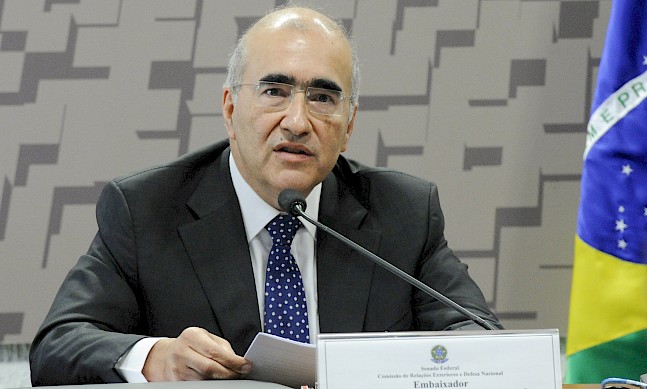









Brazil’s Ministry of Mines and Energy is shaping one of the world’s largest clean-power markets through grid expansion, hydrogen adoption and new industrial policy. With renewables accounting for more than 90% of its electricity matrix, the country is opening major infrastructure opportunities. In this interview, Minister Alexandre Silveira discusses deepening cooperation with China, Brazil’s investment appeal and its clean-energy advantage.

“Brazil combines one of the cleanest electricity matrices in the world with solid institutions.”
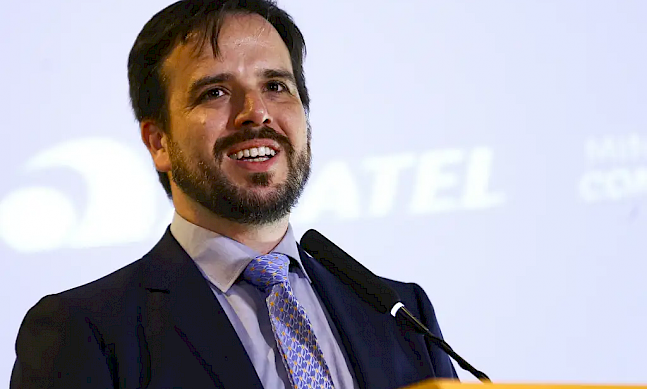
Alexandre Silveira Brazil’s Ministry of Mines and Energy
Post ThisQ: Where do you see room for long-term capital?
Alexandre Silveira, Minister of Mines and Energy: Brazil is experiencing a cycle of structural expansion in the transmission system, driven by the advance of renewables, the internalisation of load, the connection of major electro-intensive projects and the need to increase resilience in the face of extreme climate events. The most recent studies by our Energy Research Company (EPE), within the scope of the Ten-Year Energy Expansion Plan (PDE 2035), show that progress in regional interconnections will be decisive to ensure security, operational flexibility and optimisation of energy resources.
Projects such as Bipolo Nordeste II, the expansion of North–Northeast–Southeast interchange limits and new high-voltage direct current solutions – HVDC – are already part of the structural agenda that creates space for investors with a long-term profile, such as State Grid.
Q: What are the main priorities?
AS: The country is structuring significant reinforcements for the connection of large loads, especially in fast-growing hubs. The PDE shows that data centres and hydrogen plants account for more than 40 GW in access requests up to 2038, with strong concentration in São Paulo and the Northeast. This demands robust systems, scalable expansions and new technological solutions, such as Flexible AC Transmission Systems and Static Synchronous Series Compensators – FACTS/SSSC – which are already being recommended to increase reliability and release connection capacity. For these projects, there is strong demand for investments compatible with international groups seeking long contracts and regulatory stability.
Another priority agenda involves the modernisation and resilience of infrastructure in more vulnerable regions. Structural studies to eliminate dependence on thermal plants for reliability in the states of Amazonas, Amapá and Roraima, with the implementation of new transmission axes capable of meeting double-loss criteria, represent large-scale investments, high socio-environmental complexity and long maturation. This demonstrates a natural environment for experienced investors in Brazil. These projects are strategic both because of the multibillion-real reduction in system costs and because of decarbonisation.
The multi-year auction schedule, defined by the Ministry of Mines and Energy (MME), opens new investment fronts with regularity and predictability. Between 2026 and 2027, the tenders should include structural regional interconnection works, reinforcements for major load centres, expansions in the Southeast and South and the preparation of the grid for future calls for offshore electricity projects. This pipeline consolidates Brazil as one of the largest transmission portfolios in the world and offers recurring opportunities for global investors with a profile similar to that of State Grid.
Q: What incentives are on the table for Chinese partners?
AS: The Brazil–China Sustainable Mining Action Plan inaugurated a new phase in our bilateral cooperation, focused on innovation, sustainability and value addition. The agreement establishes concrete mechanisms, such as the China–Brazil Investment Alliance, green financing instruments and technical exchange in priority areas of mining and mineral transformation.
In addition, the MME and ApexBrasil are holding the Brazil–China Business Forum on Mining, creating a permanent matchmaking space between companies, investment banks and technology providers from both countries. The event, aligned with the broader energy research agenda, encourages projects that integrate mining, refining, beneficiation technologies and battery and critical mineral chains.
The objective is clear: to use the weight of global demand for strategic minerals to encourage Chinese companies to install refineries, processing plants, R&D centres and battery factories in Brazil, instead of merely importing the ore. Brazil’s new industrial policy creates additional instruments to support this verticalisation, including within the scope of New Industry Brazil.
With this, the Brazilian government seeks to consolidate a trajectory that generates qualified jobs, raises industrial competitiveness and positions the country in the global value chains that will sustain the worldwide energy transition.
Q: How do you balance the entry of Chinese operators with local energy security?
AS: Attracting new qualified operators is positive for the country, as it increases competition, diversifies investment and stimulates technological development. Within the scope of "Gas to Employ", a greater supply of natural gas means more competitive energy for industry, lower production costs and the capacity to accelerate Brazil’s reindustrialisation.
The Equatorial Margin, in turn, is treated with technical rigour and environmental responsibility. The entire process follows Brazil’s regulatory framework, which includes advanced studies, robust environmental licensing and integrated action among technical bodies. The government works on a scientific basis to ensure that any progress takes place safely, transparently and sustainably.
The entry of Chinese companies has the potential to complement national investment, but always within the environmental and operational safety rules defined by Brazil. Natural gas plays a strategic role as a transition fuel, enabling the integration of more renewables into the system and reducing emissions in industrial sectors that are difficult to electrify in the short term.
Brazilian energy policy is guided by the balance between energy security, industrial competitiveness and environmental goals. This is the parameter for the activity of any operator, national or international.
Q: How will Brazil turn hydrogen investments into real export hubs?
AS: The National Hydrogen Plan organises Brazil’s strategy around six axes and has guided regulatory, technical and financing actions to accelerate the implementation of projects. On the regulatory side, we are finalising the Brazilian Hydrogen Certification System and detailing rules on authorisation, tax classification and market governance, steps that we consider essential to provide legal certainty and predictability for investors.
In parallel, the MME is working on integration with port policy and on the modernisation of connection processes to electricity grids, preparing the infrastructure needed for production and export hubs. The public call for hydrogen hubs, which received 70 proposals, resulted in the selection of five priority projects that make up Brazil’s submission to the Climate Investment Funds, where the country ranked first among 26 competitors.
The government has also expanded public investment in R&D, multiplying the annual budget dedicated to the subject by seven, and structured technical training programmes through the Thematic Chambers of the National Hydrogen Programme (PNH2). These investments strengthen the national technological base and reduce future costs.
Together, these actions create a favourable environment to transform investment intentions, including contributions announced by Chinese companies, into effective, competitive and scalable projects, positioning Brazil as a global supplier of low-emission hydrogen.
Q: Is there any plan to attract manufacturers within “New Industry Brazil”?
AS: New Industry Brazil offers robust instruments to stimulate the installation of productive units for renewable equipment in the country. There are R$300 billion up to 2026 in financing, non-reimbursable resources and equity participation through BNDES, Finep and Embrapii, directed towards strategic sectors such as clean energy, electrification and industrial infrastructure.
With solar and wind representing 33% of national installed capacity and an investment portfolio of more than R$40 billion up to 2030, Brazil offers sufficient scale and predictability to attract factories for turbines, panels, inverters and critical components. There is also room for partnerships in technology and the development of new segments, such as storage and hybrid solutions.
By aligning industrial policy, energy security and renewable expansion, Brazil creates conditions for Chinese manufacturers to integrate their production chains into Brazilian territory, reducing dependence on imports, increasing competitiveness and expanding regional exports from Brazil.
Our final objective is to consolidate the country as an industrial hub for clean technologies, strengthening energy autonomy and driving qualified employment.
Q: What makes Brazil appealing for energy infrastructure capital?
AS: Brazil combines one of the cleanest electricity matrices in the world with solid institutions, technical governance and a predictable regulatory environment. In 2025, the sector advanced simultaneously in the expansion of generation, the integration of major transmission works, the digitalisation of distribution and the gradual opening of the free market, reinforcing the stability of the electricity system.
The robustness of energy planning, the holding of annual auctions and the modernisation of instruments such as the Supplier of Last Resort (SUI), together with the renewal of concessions with a focus on the consumer, increase investor confidence. At the same time, the expansion of renewables and the growth of micro and mini generation show dynamism and technological absorption capacity.
Another decisive factor is institutional resilience. The country usually maintains security of supply in scenarios of instability, in addition to ensuring investment capacity and a stable regulatory framework. This differentiates Brazil from other emerging markets that face political instability, regulatory volatility or supply risks.
The result is an environment where innovation, predictability and long-term opportunities converge. This combination makes Brazil a safe harbour for global capital in energy and one of the most promising markets in the world for sustainable infrastructure.