







Barito Renewables is committed to delivering a cleaner and more reliable energy source for Indonesia.
With unparalleled geothermal expertise and deep stakeholder partnerships, Barito Renewables is leading Indonesia toward a more sustainable energy architecture. The company is accelerating the nation’s green transition by consolidating its green assets and by developing, constructing, and operating increasingly efficient and innovative energy solutions. Its commitment to minimizing environmental impact, creating long-term employment, and supporting stakeholder communities is part of a mission to build a greener future for all. President Director Hendra Soetjipto Tan joined the business in 2004, presiding over its rise to prominence. Here, he outlines his vision for achieving growth through innovation, technology, and personal dedication.
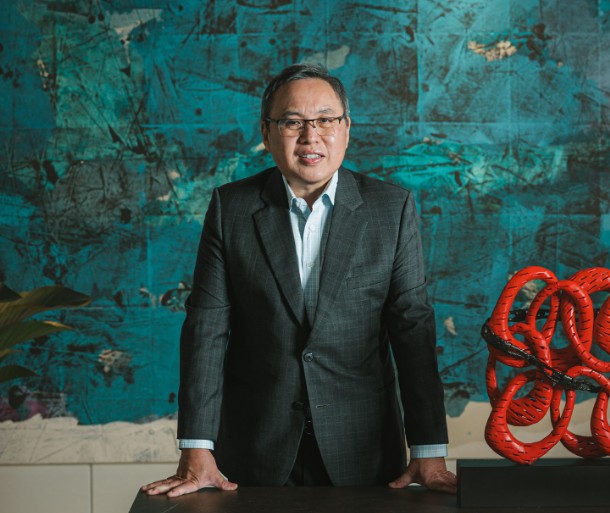
“This push for speed, efficiency, and innovation makes us globally competitive.”
Hendra Soetjipto Tan President Director
Post ThisQ: What is your strategic vision for Barito Renewables?
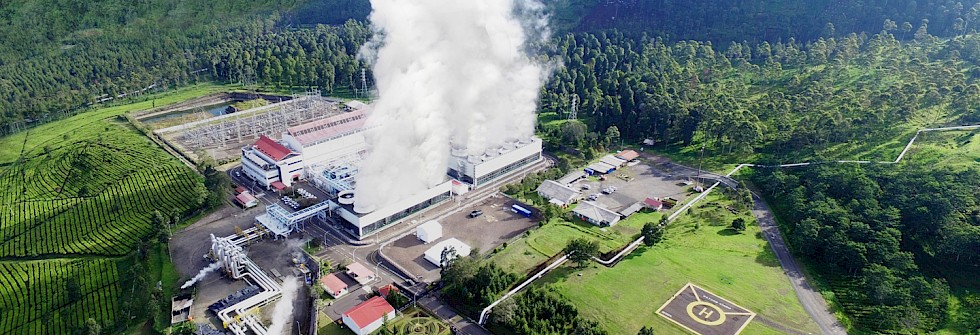
Hendra Soetjipto Tan: In 20 years, we have grown from zero to nearly 900 MW, making us the largest geothermal energy producer in Indonesia. Our goal is to become number one globally by 2030, supported by a strong portfolio.
Q: What has been your biggest challenge to date?
HST: Acquiring Chevron’s Indonesian geothermal plants in the mid-2010s. Funding it was the challenge: $2 billion is the largest acquisition ever made – still unmatched today. We teamed up with EGCO from Thailand and AC Energy from the Philippines and we had to be creative, convincing shareholders, our board, the banks for financing, and Chevron that we are the right owners for the asset. It was dynamic, unforgettable, and the deal of the year.
Q: How do you remain dominant in a competitive market?
HST: The key is running power plants efficiently, controlling costs, and reducing lead costs to stay competitive. Drilling time has dropped from 60 days to 14 to 18 days, with a goal of 10 days. Reliability is critical; our plants operate at 99.5 percent reliability, which is exceptional. We must build the most efficient plants, measured by cost per megawatt and steam consumption per megawatt, while constantly adopting new technology to lower operating costs and compete with fossil fuels.
Q: What is your approach to innovation?
HST: We stay agile by questioning practices. Can the next plant be more efficient than the last? How can we drill more effectively? This push for speed, efficiency, and innovation makes us globally competitive. We also use advanced technology, including AI, to help predict fractures and prevent stuck pipes – a frequent problem invisible from the surface. Efficient, reliable, sustainable operations, supported by innovation and technology, are the only way to stay competitive.
Q: What are your broader plans for expansion?
HST: By the end of 2026, we will reach 1,000 MW. We have two greenfield projects: Hamiding in North Maluku and Sekincau in Sumatra. Together, these sites could add about 900 MW in the next five to eight years, effectively doubling our capacity. We continue exploring opportunities at geothermal sites, especially in Java and Sumatra, to expand our portfolio further.
“We have the expertise, the reputation, and the right location at the right time for geothermal.”Post This
Q: Are there opportunities for inward investment?
HST: To date, I have raised close to $4 billion in funding for financing, acquisitions, and new plants. We expect to raise another $6-7 billion going forward. We have low operating costs, steadily declining construction times, highly reliable plants, and strong recovery capabilities when issues arise. Added to this are a strong safety record and consistent results.
Q: How did your early career shape the way you lead in renewables today?
HST: I was trained as a civil engineer and began my career in 1993. Before that, I worked as a real estate consultant at GLW, doing appraisals and feasibility studies. That was the first time I learned how to learn, moving from the technical side of civil engineering, such as building design and calculations, to applying those skills in business. I studied market locations, feasibility, whether to build a mall, office, hotel, or other real estate, and gained my first real business introduction.
In 1995, I returned to study and came back in 1996 as an equity research analyst at Deutsche Morgan Grenfell, later acquired by Deutsche Bank. There, I learned to analyse companies from an investor’s perspective: buy, sell, or hold. Simple questions, but tough to answer.
Then came the 1997 crisis. Equity research jobs disappeared, and I moved into investment banking, not for fundraising, since there was none, but for restructuring troubled companies. Many had dollar-denominated debt, and with the rupiah collapsing against the dollar, survival was the focus.
From 1998 to 2003, I worked in restructuring. And in 2004, I joined this company. Our first purchase was a power plant from Credit Suisse and Deutsche Bank. I knew nothing about geothermal at the time. The previous developer had borrowed, built, and then lost it in the crisis. I did not know how to construct or operate it, but as a civil engineer, I related it back to location fundamentals, much like real estate.
We weathered the 1997 economic crisis, the 2008 Lehman Brothers crisis, and COVID-19. Each crisis forced us to adapt, think harder, and find creative solutions.
Q: Why is Barito Renewables the right investment partner?
HST: We have 20 years of experience. We are the largest geothermal producer and have capable engineers and teams managing geothermal and wind operations. We enjoy strong reputations with local, regional, and international banks and institutions. We are reliable and trustworthy, we prioritize safety, care for our employees, and work closely with communities to ensure they benefit too. We have the expertise, the reputation, and the right location at the right time for geothermal.
Q: Why should global investors seek opportunities in Indonesia's Energy sector?
HST: Indonesia is blessed with high-quality geothermal reservoirs, high temperatures, good permeability from volcanic activity, and strong pressures. Also, the government is moving in the right direction.
It is a big country, eighth largest in the world by area, 5.2 million square kilometres, with 275.8 million people. As a developing country, we face many challenges: the need for better infrastructure, transmission lines, railways, and more power plants. Electricity consumption per capita remains among the lowest in the world, leaving huge room for growth.
Geographically, Indonesia also has strong advantages. With abundant sun, fertile land, and rich seas, it can be a global food source. It also has 17,000 beautiful islands. But challenges remain, and with them, opportunities. Places that are already developed attract tourists; places like Indonesia, with gaps to fill, attract builders and investors. It is a place to work, not just to spend vacations.