






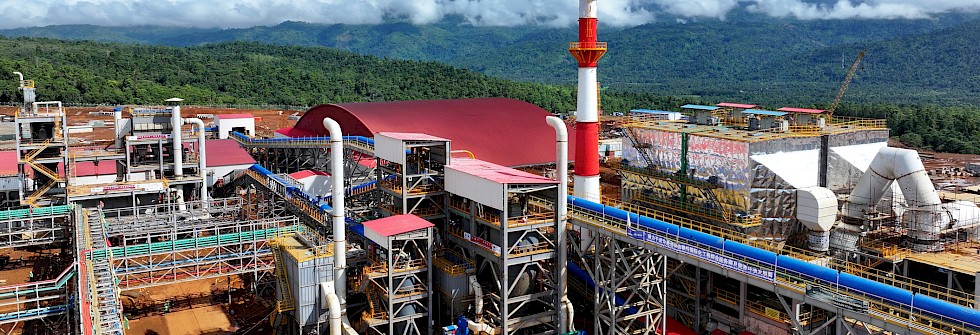
Ceria Corp is at the forefront of Indonesia’s shift to green nickel production.
Ceria Corp is setting a new benchmark for Indonesia’s nickel industry. Designated as a National Strategic Project and National Vital Object, the 100% Indonesian owned-company is developing an integrated operation focused on ESG compliance and long-term sustainability. Its rectangular 72 MVA rotary kiln-electric furnace (RKEF) smelter in Southeast Sulawesi, powered by a renewable energy certificate (REC), produces 63,200 tons of ferronickel annually at 22% purity – surpassing industry norms. “Our product also has very low carbon, sulfur, and phosphorus content,” says Ceria Corp CEO Derian Sakmiwata. “We aim to differentiate our product because we see a significant supply gap in European and U.S. markets."
As demand increases, Ceria Corp is in the process of developing a second RKEF line. Energy and water conservation, as well as emission control, are part of the green construction of both smelters. Meanwhile, the EV boom has prompted plans for an estimated $2 billion high pressure acid leach (HPAL) plant to process cobalt-rich limonite ore into 146,600 tons of mixed hydroxide precipitate (MHP) annually, equivalent to 55,400 tons of nickel metal and 6,000 tons of cobalt metal.
With capital-intensive projects in the works, Ceria Corp is in talks with international equity partners for potential investment. As ESG principles become a predictor of long-term investor confidence, the company is committed to creating a fully traceable and responsibly managed ecosystem – from its nickel mining concession to downstream processing facilities in the EV battery ecosystem.
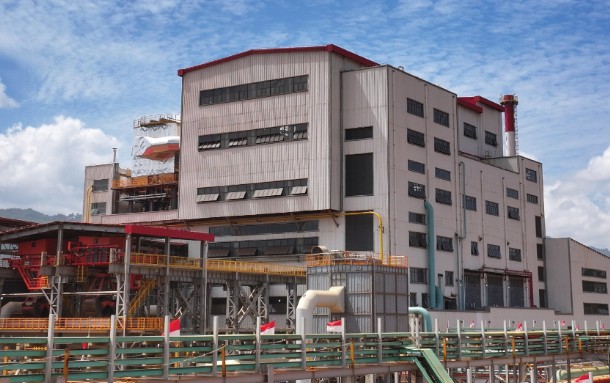
“Ceria’s resources and reserves are projected to supply our processing plant for over 20 years. Sustainability is critical to us. It is our top priority,” adds Sakmiwata. “The majority of our green energy comes from hydropower, supported by a 352 MW power purchase agreement with PLN, the state electricity company. Additional power includes a 60 MW barge-mounted power plant (BMPP) equipped with an LNG terminal and regasification facility, and another 284 MW gas engine power plant in progress." The company has held a Blue PROPER rating on environmental compliance for six consecutive years since 2018.
With commitments to education, health, economic, socio-cultural, environmental, and infrastructure development set, and over 65% of its workforce drawn from the local population, Ceria Corp is aiming for initiatives for responsible mining assurance (IRMA) certification as part of its sustainability roadmap – and is ready to deliver environmentally responsible products, support the green economy and reinforce Indonesia’s global leadership in the sustainable nickel industry.
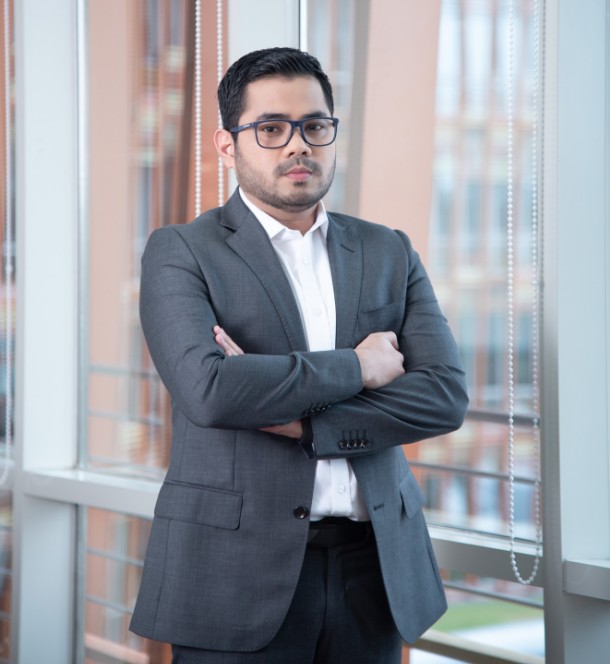
Read selected extracts from the interview below.
Q: How has Ceria's process of significant transformation unfolded over the years?
Derian Sakmiwata: Ceria started as a trading company, founded by my father. He is still active today, though now he works behind the scenes. Currently, the company is run by me and the other directors, but we still seek his advice since he serves as chairman.
My father began with trading. At some point, he questioned why he should continue trading when he could own a nickel tenement. That is how it all started. From that point, we began developing infrastructure. But owning a mining tenement is incomplete without the necessary licenses. While we waited, we started building infrastructure.
He already had the vision: why sell the ore when we could process it ourselves? That was around 2012. We began learning how to build a nickel processing plant, the RKEF. We had to learn everything and make sure everything we built would work properly.
Q: As one of the early locally driven smelter projects, what did the first tapping mean for Ceria?
DS: When we had our first tapping on April 27 2025, it felt like everything we had worked on for so long had finally paid off. In fact, many people doubted us, they would question local companies building their own smelters without Chinese involvement. But we showed that Indonesians can process their own nickel ore.
The key is to being willing to learn. It takes a while and it's capital-intensive. But the question is: are you willing to invest that time and money to learn? In the end, the results are worth it. The feeling when we saw that first ferronickel tapping was indescribable.
Q: What is the significance of Ceria's "100% Indonesian" collaboration model?
DS: We received funding from Bank Mandiri. This smelter is a true collaboration between a local company like us and local banks like Bank Mandiri, BGB, and Sulselbar. We also received power from PLN, a state-owned company. This is 100% Indonesian. This collaboration is entirely Indonesian.
Everything we did was reported to the government. That is how we obtained our Strategic National Project status and Vital Object status. We knew we could not do this without their support.
Q: From a commercial standpoint, how does Ceria differentiate its product at an increasingly crowded nickel market?
DS: At Ceria, we own the tenement, and the project is located directly on top of it. We do not worry about supply. A lot of smelters have shut down due to insufficient supply. We have secured our own.
In addition, our product quality is higher than most smelters. While others produce ferronickel with 9–15% content, we produce at 22%. We aim to make our product different, because it is intended for European and U.S. markets. We are not targeting China, since it is already too saturated.
Q: What new projects are you pursuing as Ceria looks to expand its operations?
DS: The plan from the beginning has been to build four lines. We have completed the first line and already built some capacity for Line 2. Hopefully, we can wrap everything up by the end of this year. We are not stopping at the RKEF, we also plan to build an HPAL plant.
We have already stockpiled 10 million tons of limonite. One HPAL plant will cost around USD 2.3 billion. We are currently in talks with several potential equity partners from Europe, Japan, and Korea.
Q: How do you respond to the growing ESG scrutiny around the industry?
DS: We are trying to show the world that Indonesian nickel is not “dirty”, as often portrayed. At our RKEF facility, we recycle heat waste and reduce our energy costs by around 30%. Our chimney is smokeless. There is no visible smoke emission.
We have held a Blue PROPER rating from the Indonesian Ministry of Environment and Forestry for the past six years. We are aiming for Green next. Sustainability is critical to us. It is our top priority. Our goal is to become a truly sustainable global nickel player.