







State-owned Telkom Indonesia leads national development of digital telecoms and ICT infrastructure.
Telkom Indonesia is undergoing a strategic transformation under the Telkom 2030 program, built around four core pillars. These include improving operational performance and cost efficiency, reducing subsidiaries to streamline the company’s portfolio, shifting from a hybrid model to a true strategic holding structure, and unlocking value from underutilized assets. “The objective is simple: return to our core, focus on what we do best, and strengthen our digital infrastructure foundation,” says CEO Dian Siswarini.
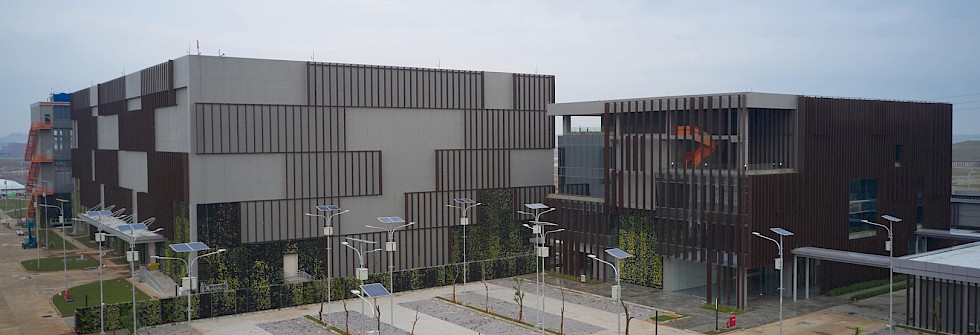
That infrastructure includes a growing network of more than 35 data centers, from hyperscale to edge, serving both domestic and regional demand. “Telkom aims to play a major role in Indonesia’s data center ecosystem,” says Siswarini. The company already operates sites in Singapore, Hong Kong, and Timor Leste and is now expanding its hyperscale capacity with an AI-ready facility in Batam. “Looking ahead, we plan to expand further to meet Indonesia’s growing digital infrastructure needs,” Siswarini adds.
As Telkom cements its key role in digital infrastructure, the company is also building partnerships to further enhance its position in Indonesia’s AI ecosystem. The firm recently launched an AI Center of Excellence and is forming cross-sector collaborations across academia, government, and industry to accelerate the technology’s development. “We are open to working with partners from the U.S. and around the world to develop AI solutions,” says Siswarini. “I want Telkom to be recognized as a strong collaborator, co-creating solutions that make real impact.”

“Telkom aims to play a major role in Indonesia’s data center ecosystem.”
Dian Siswarini CEO
Post ThisRead selected extracts from the interview below.
Q: How do you describe the leadership mindset you are bringing to Telkom at a time of such rapid industry change?
Dian Siswarini: I have been in the industry for a long time, long enough that I often joke it has been more than a hundred years. I enjoy this industry because telecommunications move at an exceptionally fast pace. Compared with other sectors, the “clock speed” of telecom is among the highest. Change happens rapidly and continuously.
To stay relevant, we must be agile. What matters today may not be relevant tomorrow or next year. Both content and context evolve quickly, and we need to be prepared to adapt. That is what I have learned throughout my career.
For Telkom to thrive, everyone in the organization must embody agility, collaboration, openness to new thinking, and the understanding that success is impossible without cooperation. This is the culture I want to reinforce at Telkom.
Q: What sits at the core of Telkom 2030 and why was this reset necessary now?
DS: When I arrived, I continued the “Five Bold Moves” transformation initiated by the previous management. I then relaunched it as Telkom 2030, which consists of four transformation pillars.
The first pillar is housekeeping, which focuses on strengthening operational excellence. This includes tighter management of operating expenditures, improving governance, and embedding a refreshed organizational culture.
The second pillar is streamlining the group. Telkom currently has around 62 subsidiaries, far too many, and not all of them create value. We aim to streamline the portfolio to about 22 subsidiaries. The goal is to make the organization more agile and more focused on core strengths.
The third pillar is shifting our modus operandi from a hybrid operating model to a true strategic holding. The fourth pillar is unlocking value from under-utilized assets, such as our extensive fiber infrastructure. These four transformation pillars form the foundation of Telkom 2030.

Q: As you streamline the group, what do you define as Telkom’s true core strengths?
DS: We are a telecommunications company, and our core strength lies in digital infrastructure. This means we excel at designing, building, and operating digital infrastructure such as towers, fiber-optic networks, radio access networks, data centers, and similar assets. These are our true competencies.
We have also been involved in businesses outside our core strengths, such as insurance, hotels, apartments, healthcare, and various other non-core ventures. For this reason, we plan to divest, close, merge, or exit these businesses.
Q: How do you view Indonesia’s trajectory as a data center market, particularly in the age of AI?
DS: Demand for data centers is accelerating rapidly, driven primarily by AI, which has become the strongest catalyst for global data center growth. Five or ten years ago, no one predicted the scale of development or the massive energy consumption that AI workloads would require.
With Indonesia’s large population, demand for local data infrastructure will only continue to rise. Data must be processed close to where users are. The key challenge is power availability, especially efficient and green power, and the second is connectivity. Without strong connectivity, a data center cannot function effectively.
We currently operate around 35 data centers, ranging from hyperscale facilities to smaller edge data centers, and we are developing new hyperscale facilities, including a significant build-out in Batam with an AI-ready and renewable energy front.
Q: How do you balance Telkom’s commercial goals with its national development mandate?
DS: As a SOE, we have always had two fundamental objectives: to act as an agent of national development and to create value and profitability. Historically, the development mandate was more dominant.
With Danantara, the priority has shifted. The emphasis now is on profitability and higher dividends, while we still maintain our role as an agent of development. We must balance both responsibilities, delivering stronger financial performance while continuing to support strategic national initiatives.
Q: What role does AI play in Telkom’s strategy, and how do partnerships factor into that vision?
DS: AI has become the global buzzword, and rightly so. AI is not the future; it is already shaping the present. Telkom has established an AI Center of Excellence and is collaborating with ecosystem players through cross-sector partnerships involving universities, media, government, communities, and industry.
Q: What must Telkom demonstrate to earn investor trust during this transformation?
DS: The most important thing we must demonstrate is trust. To earn it, we must show a consistent ability to execute and to deliver exactly what we promise. Execution capability is the first and most critical factor. The second is good governance. We must demonstrate strong governance practices, especially because we are listed on the New York Stock Exchange (NYSE). The third is proving the progress of our transformation agenda.
Q: How do you see the current investment case for Telkom?
DS: It is the right time to invest and buy Telkom shares. The valuation is currently very attractive, significantly undervalued, making this a compelling moment to enter.