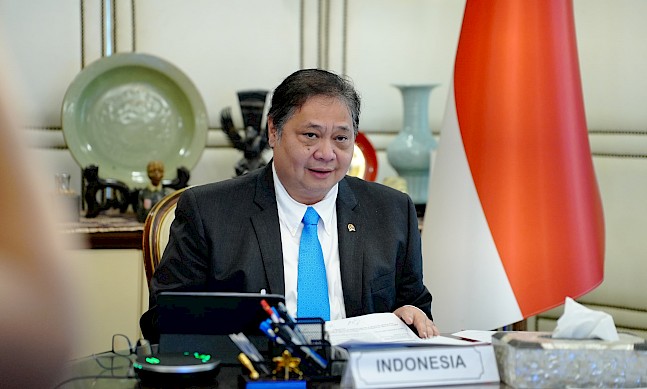








Indonesia seeks faster growth through grassroots programs while preserving fiscal stability. In this interview, Vice Minister of Finance Suahasil Nazara explains how policy can drive national development.
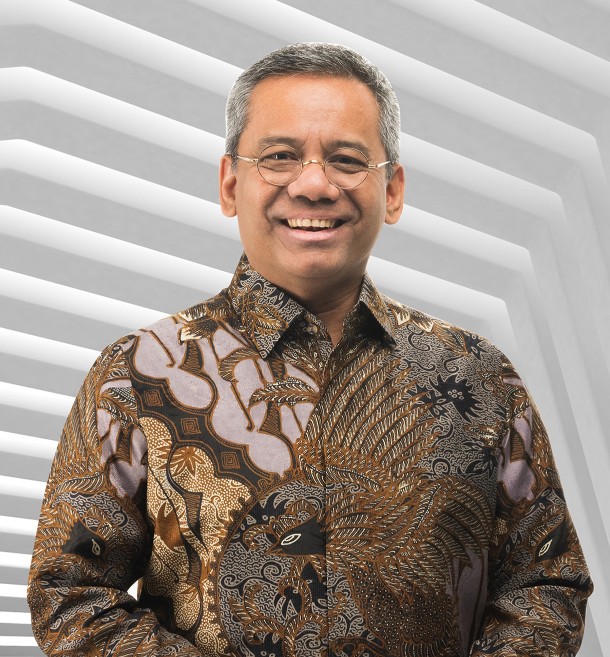
“Growth is about people. Development is not for the sake of development itself.”
H. E. Suahasil Nazara Vice Minister of Finance
Post ThisQ: What are Indonesia’s macroeconomic ambitions?
H.E. Suahasil Nazara, Vice Minister of Finance: We have been growing at a steady 5%.
President Prabowo has come forward with big ideas on how to unlock the country’s potential. He believes that grassroots-level economic activity is a source of growth. The free meal program and the cooperative program are foundational to growth from the ground up. That is the transformative vision that, if executed correctly, can propel Indonesia’s economic growth well above 5-6%.
Q: How has your fiscal policymaking evolved?
SN: Fiscal policy is always an anchor for a country, an anchor for stability. At the same time, fiscal policy is critical for promoting growth: through revenue policy, through spending policy, and through financing decisions that affect the financial sector.
First, allocation: providing the best use of state resources. Second, stabilization: fiscal policy must act as an agent that stabilizes the fluctuations and shocks Indonesia may encounter. Third, redistribution between regions. The budget serves as a shock absorber.
Q: How do you balance fiscal discipline with the 8% growth target?
SN: Revenue targets were not achieved in 2025. We were able to reduce total spending from the original budget plan. Despite weaker revenue, we still provided fiscal stimulus and funded the president’s priority programs — the cooperatives, the free meal program. The deficit expanded to 2.92%, and we achieved 5.39% growth in the fourth quarter despite 4.87% in the first. The Ministry’s ability to curb spending (selectively, not across the board) is what makes this possible.
The Republic of Indonesia should not be valued only by its budget book or its central government financial balance sheet. The balance sheet of Danantara must now be part of the picture. The story must be communicated and shown through evidence and outcomes.
Q: How does the two-arms framework work in practice?
SN: The big spending which unlocks Indonesia’s economy is no longer capital spending out of the budget. That spending is now conducted by Danantara. They receive money from dividends. They finance their own activities. They are building projects — waste-to-energy, the downstreaming of minerals and resources — that are the equivalent of what used to come through budget-driven capital injection.
Q: How do you address international markets?
SN: We have to communicate more, and we have to show evidence. We explain the story; we show the indicators, the outcomes. But the story is changing, and it is not a story everyone immediately understands.
The delegation included not only the Ministry of Finance and Bank Indonesia but also Danantara. We explained this framework directly to the international investor community.
Q: How does Coretax modernization strengthen fiscal capacity?
SN: We are modernizing our tax administration through the Coretax system. One notable development this year is pre-populated data. The system now automatically collects withholding tax data from across the economy. The remaining tax due is calculated automatically. We have individual tax accounts in Coretax, which will significantly improve compliance.
Tax policy is also about tax expenditures — not just collection. Some policies deliberately reduce government receipts: tax holidays, income tax reductions for small and micro enterprises, VAT exemptions on staple foods. The revenue forgone from these policies amounts to around 2% of GDP. When Indonesia’s tax ratio is reported at 9–10%, the effective mobilization is closer to 11–12%.
Q: Why is Indonesia compelling for global investors?
SN: Three things. First, a large population: the market is here, next to your investment. Second, mineral resources. Not every country has a combination of a large domestic market and a substantial natural resource endowment. Third, and this is the message I want to leave; investors should get future values at today’s price.
Q: Which sectors constitute government investment priorities?
SN: Deriving from President Prabowo’s vision: first, food security. This is a country of 280 to 290 million people. They need food, and we must ensure it is available. Second, energy security. Third, human capital: education and health. Building hospitals and education facilities throughout Indonesia is investment, not simply expenditure. Fourth, micro, small, and medium enterprises.
Q: How does human capital investment drive long-term growth?
SN: Growth is about people. Development is not for the sake of development itself, it is for the betterment of people. Education and health are the two pillars of human capital. The people are the center of development. That is the organizing principle.