







South America's largest economy has long been defined by its commodities. Now, under Nova Indústria Brasil, its R$300 billion reindustrialisation drive, the nation is investing in the infrastructure, networks and partnerships needed to become Latin America's industrial hub.
In January 2024, President Luiz Inácio Lula da Silva launched Nova Indústria Brasil, a sweeping programme to stimulate domestic industry in line with long-term national priorities. Backed by a spending commitment of more than R$300 billion, the plan is built around six core missions across healthcare, defence, infrastructure, energy transition, food security and digital transformation. “It is very important that we once again have an industrial policy – innovative, digitalised, as the world demands,” Lula said at the launch.
A central aim is to cut the ‘Custo Brasil’ – the logistics costs associated with operating in a country with continental scale – by developing infrastructure assets and better integrating heavy industry, rail corridors, highways, waterways and deep-water ports. The strategy is underpinned by strong institutional support and coordinated engagement between government ministries, the private sector and overseas capital. “We divided up this pipeline,” explains Minister of Transport George Santoro. “Instead of centralising everything with a single player, we built governance around it.”
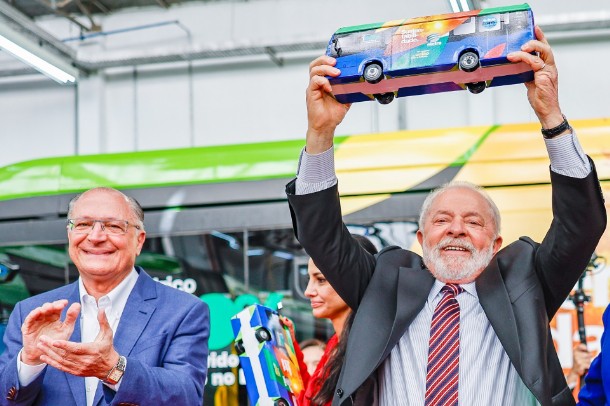 Planalto Palace from Brasilia, Brazil - June 2, 2023 - Inauguration ceremony and visit to the new production line at the Eletra factory.
“It is very important that we once again have an industrial policy – innovative, digitalised, as the world demands,”
Luiz Inácio Lula da Silva President of Brazil
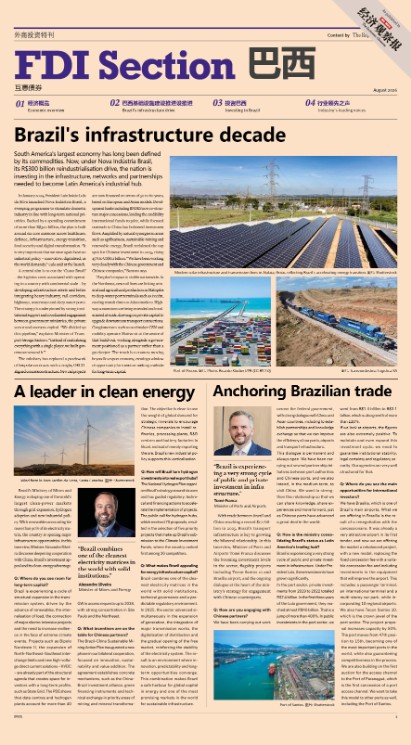
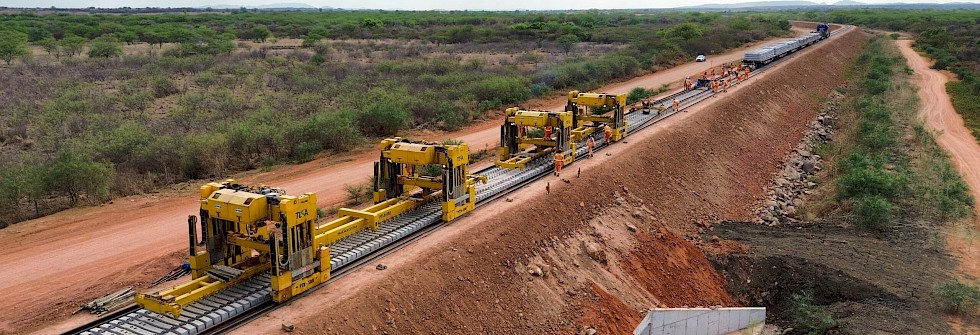
Post ThisThe plan’s impact is visible nationwide. In the Northeast, new rail lines are linking mineral and agricultural production in Matopiba to deep-water port terminals such as Pecém, cutting transit times to Asian markets. Highway concessions are being extended and modernised at scale, drawing on private capital to upgrade downstream transport connections. Conglomerates such as steelmaker CSN and mobility operator Motiva sit at the centre of that build-out, working alongside a government positioned as a partner rather than a gatekeeper. The result is a country moving beyond its export economy, creating a window of opportunity for investors seeking a vehicle for long-term capital.

The ministry has replaced a patchwork of bespoke contracts with a single, OECD-aligned concession structure. New rail projects are now financed on terms of 50 to 60 years, based on European and Asian models. Development banks including BNDES now co-structure major concessions, lending the credibility international funds require, while focused outreach to China has bolstered investment flows. Amplified by natural synergies in areas such as agribusiness, sustainable mining and renewable energy, Brazil reclaimed the top spot for Chinese investment in 2025, rising 45% to US$6.1 billion. “We have been working very closely with the Chinese government and Chinese companies,” Santoro says.
“We believe there is room for Chinese companies to come and produce in Brazil.”
Luciana Costa Director of Infrastructure, Energy Transition and Climate Change, BNDES
Post ThisAs Brazil aims to see infrastructure investment top R$1 trillion over President Lula’s administration, BNDES is playing a crucial role in financing and building Chinese partnerships.
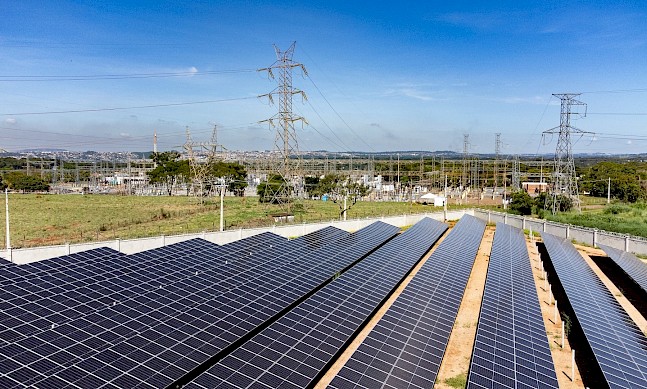
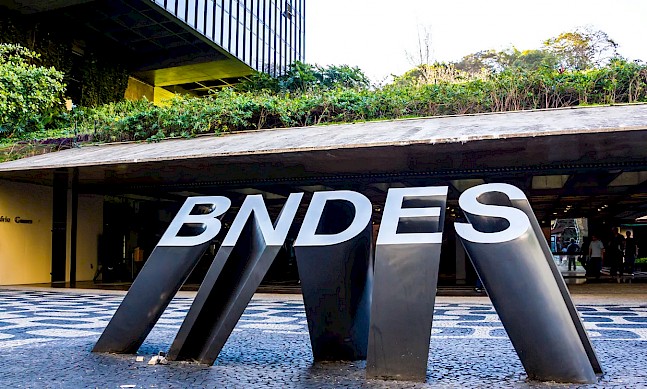
BNDES, Brazil’s 73-year-old development bank, is on track to mobilise up to R$300 billion in funding for new infrastructure projects over President Lula’s four-year term. The bank’s financing model has evolved in recent years with BNDES becoming more active in capital markets in order to offer innovative financial instruments and structuring. That reflects the boom in Brazil’s infrastructure development. “Brazil needs all kinds of infrastructure. It is a country of continental dimensions with a very large population,” says Luciana Costa, the bank’s director of infrastructure, energy transition and climate change. “Brazil is the largest net exporter of food, but we still need to make major advances in logistics for the export of minerals and food. Our biggest gaps are in transport, logistics, urban mobility and sanitation,” she adds.
With BNDES active in the nation’s largest infrastructure developments, the bank’s model typically involves taking a 30 to 50% stake in projects. “The fact that we are in the project acts as a seal of quality, making it more attractive to capital market investors,” Costa explains. “BNDES complements the capital markets and private banks very well when it comes to financing these complex projects.”
That’s backed by close coordination with ministries across government. BNDES’s involvement has helped enable the Ministry of Transport to redesign the risk matrix behind road concessions. The result has seen 22 auctions held, more than 10,000 kilometres of new contracts agreed and R$150 billion in investment committed. “It is impossible to think of financing R$150 billion on company balance sheets alone,” Costa says. “What we hear repeatedly is that without BNDES these highly successful auctions could face delays due to funding constraints.” The same model now underpins investment in sanitation and urban mobility, including new metro lines and São Paulo’s electric bus fleet.
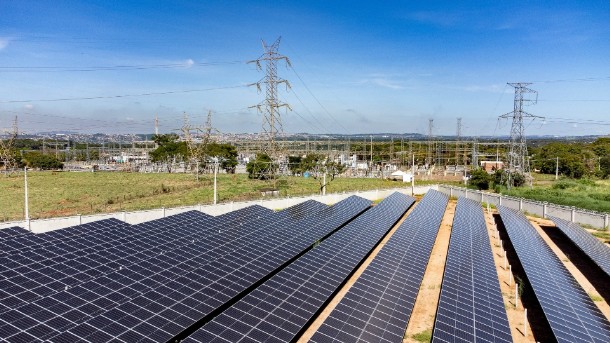
Renewable energy is an area of particular focus, with BNDES the world’s largest financier of projects in the sector. That’s seen the bank forge extensive links with Chinese partners, including renewables companies and financial institutions. “BNDES is a major financier of Chinese companies that are here in Brazil,” Costa says. “Chinese banks, just like the capital markets, like to have BNDES by their side, because if we enter a project, we are signalling to the market that it is well-structured and that the risk is lower.”
That foundation creates scope for further growth, with Costa identifying railways and ports as major opportunities for Chinese investors, alongside sustainable aviation fuel and electrification of every kind. “We believe there is room for Chinese companies to come and produce in Brazil, and for Brazil to become an export platform for products made here,” Costa says. “BYD is already here. I think it would be a win-win.”