








Georgia is rarely considered in discussions about the future of medicine. It is known for its landscapes, wine and ancient culture, but this misses a key point. The next step in medicine is not about treating disease; it is about managing the human condition. In this context, Georgia begins to matter.

Medicine saves lives, but it does not determine the condition in which people continue to live. That is shaped by environment—not as a background but as part of the system itself.
Georgia has a rare characteristic: In a compact territory, it concentrates multiple climate zones, terrains and biological conditions. This functional variability directly influences the human organism. Air, altitude, temperature, light and microclimate affect recovery, adaptation and resilience. These effects are widely observed but rarely structured into a coherent system.
At the same time, the global context is shifting. Chronic stress, artificial environments, disrupted circadian rhythms and metabolic instability are the norm. In extreme conditions, such as in the Gulf, this is even more pronounced, leading to a fundamental question: Can we work not only with disease, but with the conditions in which it forms?
This requires a shift—from treating disease to structuring the conditions in which health is formed.
A practical answer has been developed by Dr. Tamaz Mchedlidze—a physician and architect of medical systems. He introduced the concept of Health Resource Management (HRM), in which health is defined not as the absence of disease but as a system of resources: energy, recovery, resilience and adaptation. And these resources can be managed.
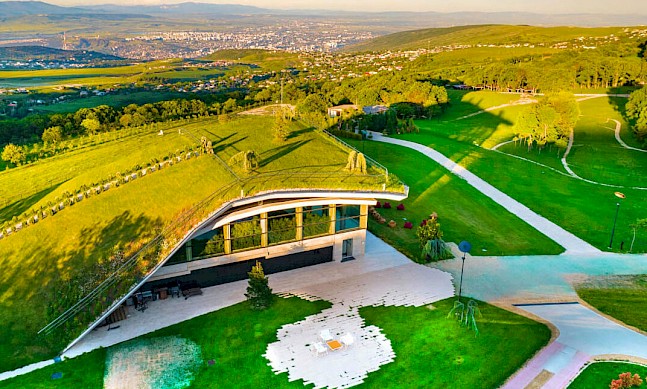
HRM integrates medical technologies, lifestyle and natural environment. At Bioli, in the mountains above Tbilisi, this model has been implemented in practice—as a functioning system in which medicine, behavior and setting work as a single structure. Bioli is the first wellness resort in Georgia built around HRM—one where environment is a defining condition of treatment. Outcomes depend not on isolated interventions but on the alignment of all factors. This is why Georgia is now being perceived differently: not as a destination, but as a platform for a new medical logic, where environmental diversity is not a backdrop but a tool.
The future of medicine will not be defined by technology alone but by the ability to manage the trajectory of human health. This requires a shift—from treating disease to structuring the conditions in which health is formed.