







Founded in 1992, Pace Group has grown into one of Georgia’s largest private port and logistics operators. In this interview, Co-founder Irakli Kervalishvili explains how the company has diversified its operations over time to better service regional and international clients and leverage Georgia’s growing profile as a logistics hub.
“Our role is to make the process as convenient as possible for the client.”
Irakli Kervalishvili co-Founder, Pace Group
Post ThisQ: How does your position as one of Georgia’s largest private port operators fit into your broader logistics strategy?
Irakli Kervalishvili, Co-founder, Pace Group: Transportation and logistics operate as a supply chain with many interconnected links. At its core, the objective is simple: moving cargo from the place of production to the marketplace. There are many variations of how this can be done, but fundamentally it always comes back to that process.
Our goal is to offer a full-service package. When we move cargo from Point A to Point B, it involves multiple stages and different areas of expertise. For example, we deliver raw materials to Tajikistan for aluminum production and then transport the finished products onward to markets in Europe or the United States.
To achieve this, we must provide an integrated chain of services. The process can include transportation, port handling, rail transport through Georgian and Azerbaijani railways, additional port operations, customs procedures, shipping across the Caspian Sea, and then further rail transportation in Kazakhstan, sometimes continuing to destinations such as Tajikistan. Each stage requires coordination with maritime operators, railway systems and government authorities.
Working with private companies is generally easier because decisions can be made more quickly. Government institutions, understandably, operate under greater scrutiny and often move more cautiously to avoid mistakes. This means that managing logistics across borders requires both operational expertise and the ability to navigate administrative processes.
Over time, we built the capabilities needed to manage these different components. Initially we worked closely with American companies and established a Georgian company to coordinate these activities. As the business expanded, we diversified our operations. Today we have shipping agencies responsible for maritime transport, port operating companies, freight forwarding services, rail transportation partners and brokerage firms that handle the documentation required by clients.
Customers expect a single provider to manage both the transportation and the paperwork involved in international trade. As operations grow and more companies become involved, the level of bureaucracy naturally increases. Our objective is to keep this structure as flexible and efficient as possible. We have also developed warehousing operations to manage cargo storage and stock management as part of the overall logistics chain.
Q: Do you own transport assets such as trucks, railcars or ships as part of your logistics operations?
IK: Yes, we own several core assets that are essential to the business. At the moment we operate about five or six vessels and approximately 600 railcars. Railcars are particularly important because there is often a shortage in the region. We are planning to purchase additional railcars in the future, although for now we supplement our fleet by renting private railcars.
Owning railcars can be significantly more expensive because you must take responsibility for maintenance and operational management. State railway companies are very large systems; they sell transport capacity and handle maintenance themselves, although much of their equipment is quite old.
Q: How does shortage of rail capacity impact your operations?
IK: The existing number of railcars in Azerbaijan and Georgia is not sufficient to handle the growing volume of commodities moving through the corridor. Because of this, we regularly rent additional railcars, sometimes around 100 more each year, in order to meet demand.
This additional cargo does not always generate the highest margins, but it is necessary because we have to ensure reliable service for our clients and keep the supply chain moving.
Q: How challenging is it to secure funding for these kinds of logistics investments?
IK: We are currently working on our next financing round, although the structure has not yet been finalized. These negotiations are extremely detailed and complex, particularly when public funds or taxpayer-backed financing are involved. The process requires a high level of scrutiny and transparency.
However, once you establish that level of trust, it becomes a major advantage. When you are trusted by institutions such as the US government, it signals credibility and reliability to other partners as well. When we first began this process, it took nearly four years of negotiations before we secured the financing. It was a long process, but it ultimately created a strong foundation of trust that continues to benefit the company today.
Q: What types of cargo require you to obtain additional capacity?
IK: At the moment we mainly rent railcars suitable for dry bulk cargo. These include covered wagons that are used to transport agricultural commodities such as wheat, as well as fertilizers like sulfur. We move significant volumes of sulfur from Central Asian countries.
These materials are typically granular cargo. The grain or fertilizer is loaded into the railcars and transported to the port, where it is discharged using specialized bucket systems. In addition to this, we also handle alumina for aluminum production, which is usually transported in gondola railcars. Overall, we use several different types of wagons depending on the commodity, but most of them are designed for dry bulk cargo.
Q: Does that reflect that the dry bulk segment is driving growth?
IK: Yes, that is where we are currently most concentrated. Dry bulk commodities represent a large share of the cargo moving along the corridor, so this segment has been a major area of growth for us.
Q: Where is the group’s customer base concentrated?
IK: Many of our clients are in Central Asia, but we also work with Georgian producers. For example, Georgia has a fertilizer plant owned by Indorama, one of the world’s major polymer companies, which I believe is Indonesian. The plant exports roughly 400,000 to 500,000 tons per year, much of it moving through the Black Sea.
At the same time, a large portion of our business involves working with international commodity traders, including American trading companies that purchase product directly from producers. In some cases, such as with the aluminum industry in Tajikistan, producers move alumina to the port, and we have developed the logistics services that allow them to sell the product from there. In those situations, we work directly with the producer rather than the trader.
Ultimately, our approach is always the same. Our role is to make the process as convenient as possible for the client. Logistics may be part of heavy industry, but fundamentally it is still a service business, and our focus is on providing reliable and efficient solutions for our customers.
Q: How significant is your role in supporting your clients’ operations?
IK: Each year we transport around 60,000 to 70,000 tons of finished aluminum products and approximately 150,000 tons of raw materials. Over time, the relationship has become mutually beneficial. Our clients value the services we provide because we also give them an additional level of flexibility and leverage within their supply chains.
When we see that clients need additional options or tools to manage their logistics or commercial relationships, we try to develop solutions that support them. Our role is not only to move cargo but also to provide the operational flexibility that helps them operate more effectively.
Q: How did you develop that side of your operation?
IK: Initially, our main objective was simply to move larger volumes of cargo. However, as we gained more information about the market and understood the challenges some clients were facing, we began to see opportunities to add value.
In some cases, there were commercial disputes or logistical bottlenecks that affected their operations. When we recognized these issues, we proposed practical solutions and offered to support them with alternative logistics arrangements. Our clients responded very positively because these solutions helped resolve real operational challenges.
Q: Where do you see the main areas of growth for your business over the next three to five years?
IK: We see continued growth in bulk cargo. Agricultural production is expanding everywhere because global food consumption is increasing. At the same time, industries such as machinery and manufacturing require more aluminum, which also drives demand for the types of commodities we handle. Overall, these sectors are steadily growing, and that supports the expansion of bulk cargo volumes.
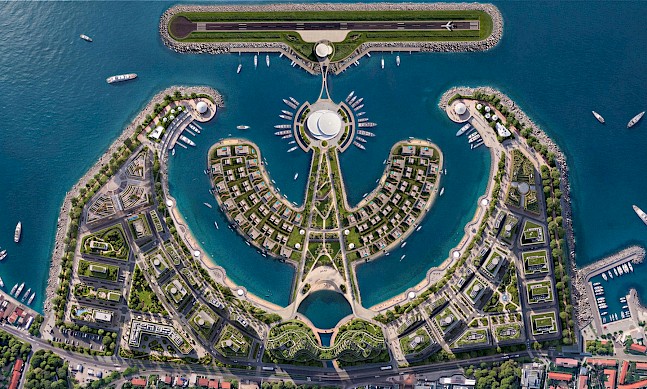
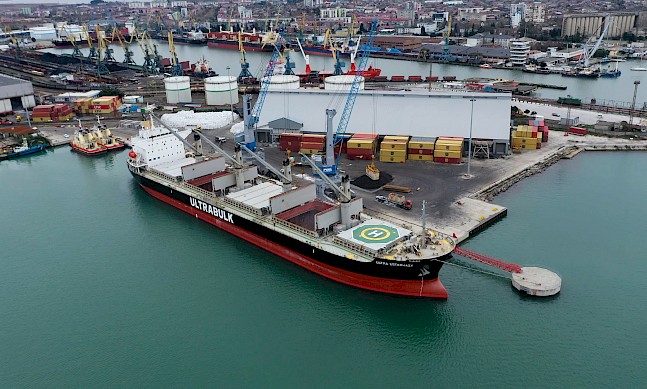
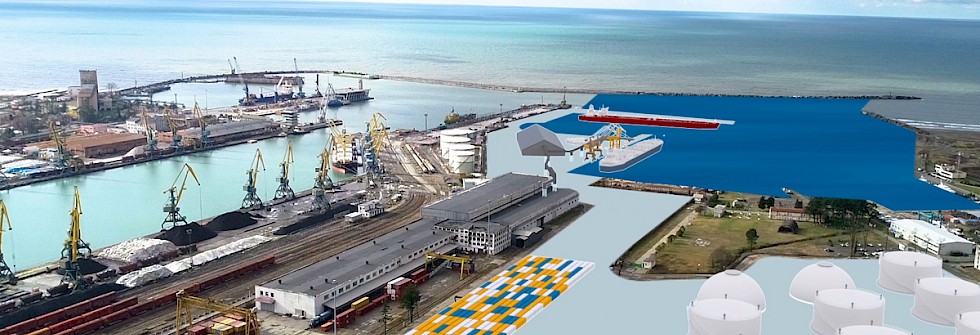
We also see opportunities in container traffic. The new port we are developing in Poti is being designed as a universal facility, which means it will be capable of handling containers as well as bulk cargo. This flexibility is important for future growth.
For the port equipment, we have invested in high-quality cranes from Germany and the Netherlands. Because the project involves financing from the U.S. International Development Finance Corporation (DFC), there are strict procurement requirements, which means we cannot use lower-cost alternatives. However, these standards ensure that the port is equipped with reliable, high-performance infrastructure from the start.
Q: You describe your company as providing a one-stop logistics service. What does that mean in practice for your clients?
IK: Our clients want to focus their time on production or trading. They do not want to spend their time dealing with logistics problems. If you bring them constant operational headaches, then it is not truly a full service and it is not a pleasant service.
Our responsibility is to remove those difficulties. If a client calls and says there is a problem somewhere in the chain, our answer must simply be that we will fix it. The value of a logistics provider is that the client can rely on you to manage the entire process smoothly.
Q: How do you view Georgia’s role as a gateway between East and West?
IK: There are different transport corridors connecting Europe and Asia. Some people say that our route is the only corridor, but that is not accurate. There is the Northern Corridor through Russia, and there are routes that pass through Iran. What we offer is an alternative corridor.
For the business community, having alternatives is extremely important. When producers and traders have multiple options, it creates greater flexibility and makes international trade much freer.
Q: What message would you give to US or European companies that may not yet be familiar with this corridor, and why should they consider partnering with Pace Group?
IK: Transportation is a specialized field. Companies that are already active in Eastern Europe generally know us and understand the role we play. What we are seeing now is growing heavy industry production in Central Asia, and many of the companies operating there are Western companies.
Some businesses choose to move their goods directly to China, but our focus is largely on connecting Central Asia with Western markets. For companies looking to access these flows efficiently, Georgia provides a strong alternative route, and we aim to support that connection through the services we provide.