







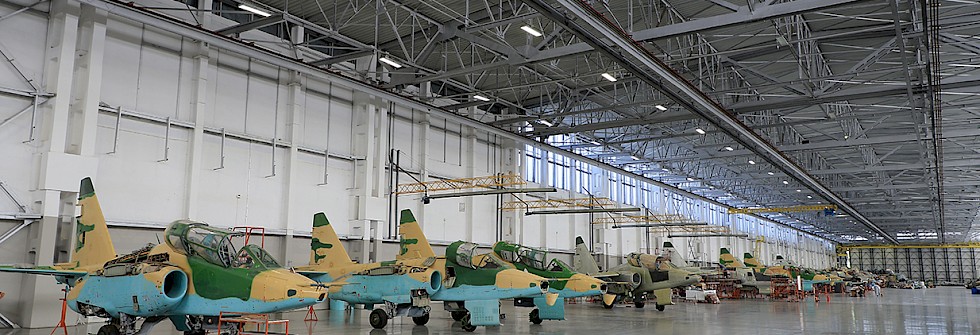
TAM’s roots stretch back to 1941, when the Tbilisi factory began producing some of history’s most iconic combat aircraft. Under Georgian aviation pioneer Vaja Tordia, it became the production home of the Su-25 attack jet, turning out more than 1,100 aircraft over the decades that followed. Since regaining operational control of the plant in 2015, the company has invested more than $15 million in equipment, infrastructure and production upgrades.
That investment now underpins a broader transformation led by Tordia’s son, Michael Rogava, which has seen the company expand its operations to include aircraft overhaul and modernization, helicopter maintenance and upgrades, unmanned aerial vehicle (UAV) development and aerospace engineering and design, alongside a dedicated Su-25 modernization line, addressing a global upgrade market TAM estimates at around 700 aircraft. Clients today include operators in Chad, Uganda and Angola, as well as partners across Eastern Europe, Central Asia and the Caucasus. “Our flexibility differentiates us,” says Rogava. “Many competitors offer a single standardized solution. We focus on tailoring aircraft and systems to each customer’s operational requirements.”
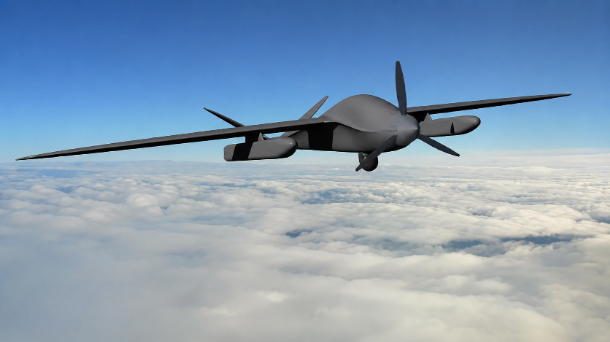 Drone drone”T-31
UAVs mark the next stage of that strategy. TAM’s drone platform is designed for intelligence, surveillance and reconnaissance, offering up to 24 hours’ flight time in mission configuration and up to 72 hours in surveillance configuration, carrying a payload of around 500 kilograms. Its newest system is Angry Bird, which features AI-enabled targeting, autonomous flight and modular payload architecture, with a production facility capable of manufacturing up to 3,000 units a month. Both programs offer scope for joint ventures and international partners, creating opportunities for investors in an emerging pillar of the industry. “We inherited a legendary aerospace legacy,” Rogava says. “Our responsibility is to modernize it and carry it forward for the next generation.”
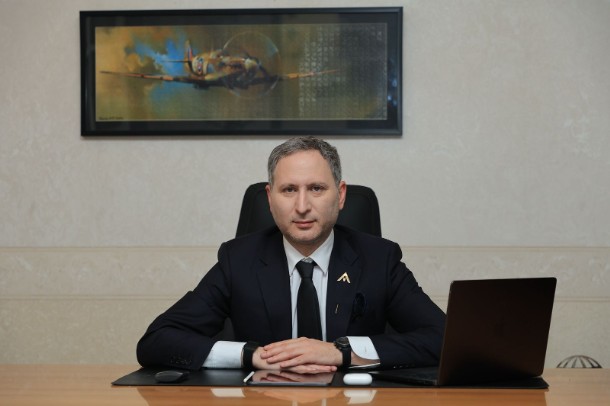
“The Angry Bird program adds AI-enabled target ID, autonomous use and scalable production.”
Michael Rogava Deputy Director, TAM Management
Post ThisQ: Why should investors look at TAM Management now?
Because TAM is not only an aerospace story; it is a plant base with history, assets and a clear path into modern defense technology. In Tbilisi, the company joins a proven aircraft factory, preserved engineering documents and new programs in drones, AI tech and system fit.
Q: What makes the heritage valuable?
Tbilisi Aircraft Manufacturing was the Georgian home of the Su-25. More than 1,100 aircraft were produced in Georgia, backed by blueprints, tools, production habits and technical memory built over decades. That knowledge cannot be bought quickly. It is earned through real aircraft, real repair cycles and real field use.
Q: How does the family legacy shape the company?
The story carries deep reverence for Mr Tornike, known in Georgian aviation as a father figure whose work helped protect the Su-25 legacy and the factory’s engineering culture. For Michael Rogava and today’s TAM team, that legacy is not soft tribute. It is a duty to honor the people who built Georgia’s aviation name and to convert their achievement into future capability.
Q: Why does the Su-25 still matter?
The Su-25 remains a rugged close-air-support aircraft used by many operators that need dependable power at controlled cost. TAM understands the aircraft from the inside: structure, wiring, cockpit, mission systems, maintenance and field use. That makes the company a credible partner for overhaul, digital avionics, radio upgrades, smart weapons integration, survivability improvements and life extension.
Q: Is TAM only preserving an old platform?
No. Management is looking at a new Su-25 path that keeps the aircraft relevant while building a broader technology base. Modernization can create near-term revenue, but the larger vision is to use the same engineering base for unmanned systems, advanced manufacturing and export-ready aerospace programs.
Q: What is the drone opportunity?
TAM is developing long-endurance UAV concepts for surveillance, border control, patrol, intelligence and special missions. These platforms are planned around modular payloads, longer time in the air and flexible customer use. The Angry Bird program adds AI-enabled target ID, autonomous use and scalable production, giving investors exposure to one of the fastest-growing segments in defense aviation.
Q: What assets support execution?
TAM has a factory, trained personnel, institutional know-how, global ties and the credibility of a plant that produced aircraft in volume. More than $15 million has been invested in modernization, equipment, infrastructure and production renewal. Investors are not backing only a concept. They are looking at a physical base that can host joint ventures, technology transfer and new manufacturing lines.
Q: Why Georgia?
Georgia sits between Europe, the Black Sea, Central Asia and the Middle East, giving TAM geographic relevance for states and users seeking capable, flexible, fairly priced aerospace systems. Existing work in Africa and other growth markets also shows TAM can serve clients beyond traditional supply chains.
Q: What is the investment thesis?
TAM can turn history into cash flow, and cash flow into new technology. The Su-25 blueprints, the memory of over 1,100 Georgian-built aircraft, respect for Mr Tornike, the new Su-25 vision and the drone roadmap create a rare aerospace-industrial proposition. Georgia kept its aviation soul; TAM is preparing to scale it again.
Q: What should investors assess next?
Investors should review documentation rights, production capacity, UAV timelines, export compliance, customer pipeline, governance, capital needs, partner technology, modernization demand and unit economics. The core question is whether TAM can convert heritage, blueprints, engineering talent and Georgian manufacturing into bankable orders, recurring contracts and long-term aerospace value.