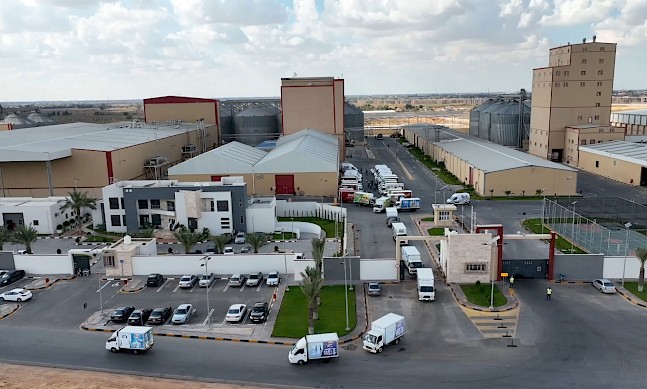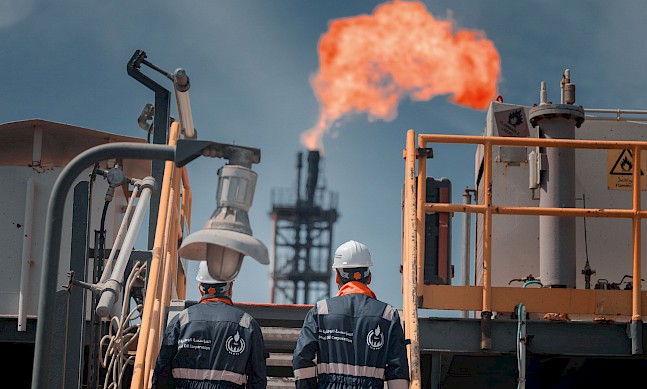








The energy sector is at the heart of Libya’s strategy for national recovery and economic development—and at the heart of the sector is the El Sharara oilfield. Managed by Akakus Oil Operations, the field is one of the nation’s most significant production assets. “El Sharara contributes a substantial portion of the country’s daily production,” says Chairman Musab Mohamed Zbeda. With energy revenues accounting for the majority of government income, the field’s output directly supports stability, public sector salaries, and national development projects. “We view our role not just as an operator but as a stabilizing force within the broader economic system,” Zbeda adds.
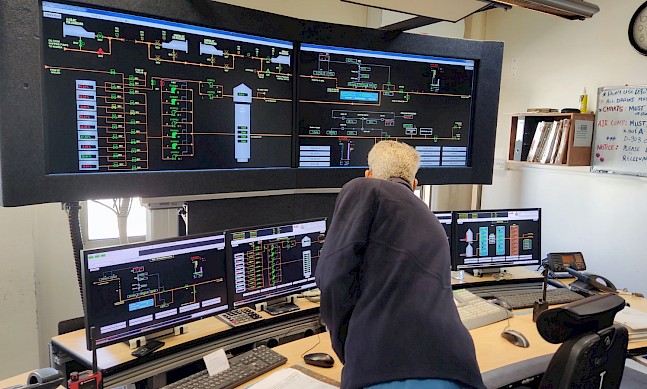
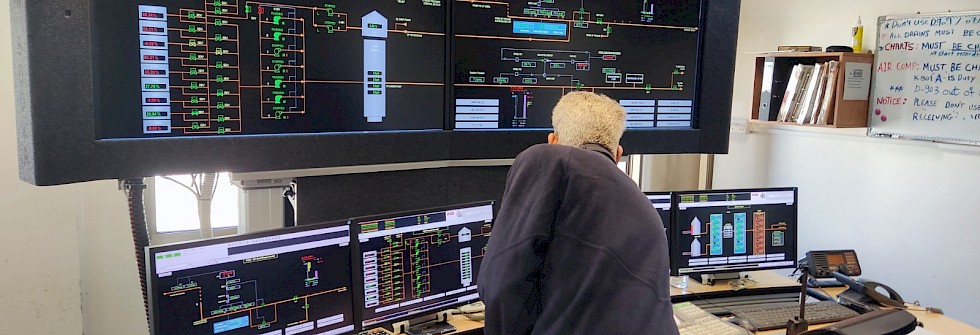
With five drilling rigs and five workover rigs, El Sharara produces high-quality light sweet crude, which is highly competitive in global markets. A key operational advantage comes from the shallow depth of the field’s reservoirs, typically around 5,000 feet. “This allows for faster drilling cycles, lower operational costs, and more efficient well operations,” Zbeda explains. This advantageous geological profile means the company’s strategy focuses on maximizing recovery through infill drilling, maintaining well performance, and optimizing reservoir management, supported by real-time monitoring to track output and efficiency.

“We are encouraged by renewed interest from major global players.”
Musab Mohamed Zbeda, Chairman of the Operations Management Committee, Akakus Oil Operations
Post ThisThat’s backed by partnership frameworks that support consistent output. Akakus has structured, long-term agreements with the National Oil Corporation (NOC) and international energy companies including Repsol, TotalEnergies, and Equinor, designed to harness the benefits of advanced technology and global expertise while ensuring alignment with national priorities and operational continuity. “Collaboration is deeply integrated into our operations,” says Zbeda. “These partnerships are essential not only for production but for knowledge transfer and long-term sector development.”
The commitment to sectoral development extends to investment in local talent. With a workforce of around 2,000 personnel, training and development are seen as vital to the future of both the company and the country. “Developing local talent is critical to the future of the sector,” says Zbeda. “Our focus is on training Libyan engineers to take on increasingly complex roles. Localization strengthens operational resilience and ensures that knowledge remains within the country.”
The wider view goes beyond human capital development, however. For Zbeda, developing the sector is key to broadening Libya’s economy over the long term. “The oil sector should serve as a foundation for broader economic development, not the sole pillar,” he says, highlighting the need to reinvest energy revenues in infrastructure, agriculture, and private sector growth. “Ultimately, the goal is to create a more balanced and sustainable economy that benefits all Libyans.”
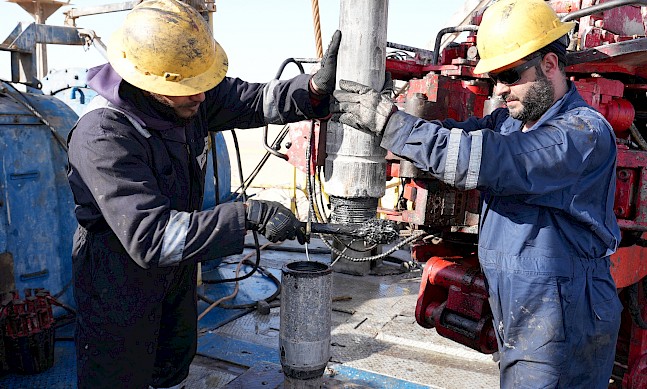
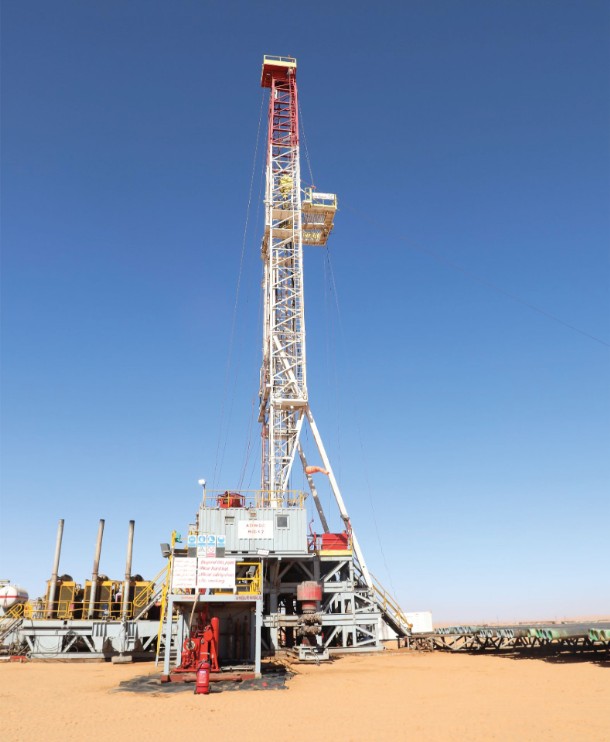 An active outdoor drilling rig. Akakus Oil Operations
While Europe remains the primary market for Akakus’s output, exports are managed through the NOC within a free-market framework supplying global buyers. Combined with Libya’s structural advantages, it creates scope for international investors seeking to leverage market demand. “Libya offers significant opportunities—substantial reserves, high-quality crude, and a strategic position,” says Zbeda. “We are encouraged by renewed interest from major global players and believe that increased investment will contribute to long-term stability.”