







How a leading Libyan law firm helps international investors navigate opportunity, risk, and growth.
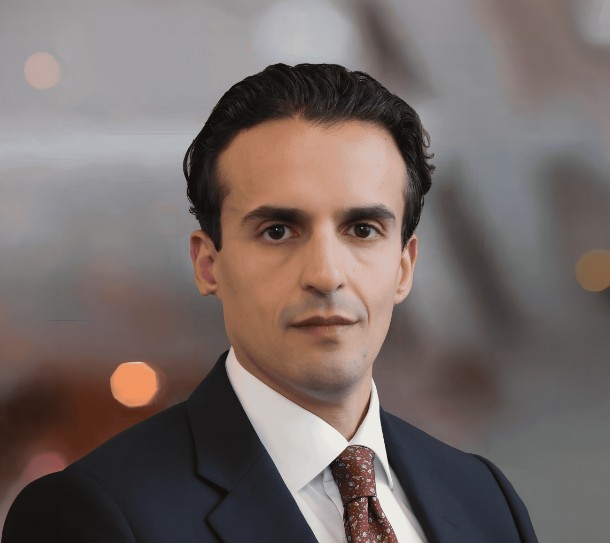
“Libya has resources, a strategic geographic position, and investment potential.”
Tarek Eltumi, founder, eltumi partners
Post ThisQ: How has international interest in Libya changed?
When I founded Eltumi Partners in 2018, Libya was viewed as too complicated and risky. Political divisions and conflict discouraged investors. Today, energy security and political developments are bringing international companies back, particularly from Europe, the United States, and the Gulf.
Q: What does the return of major international energy companies mean for Libya?
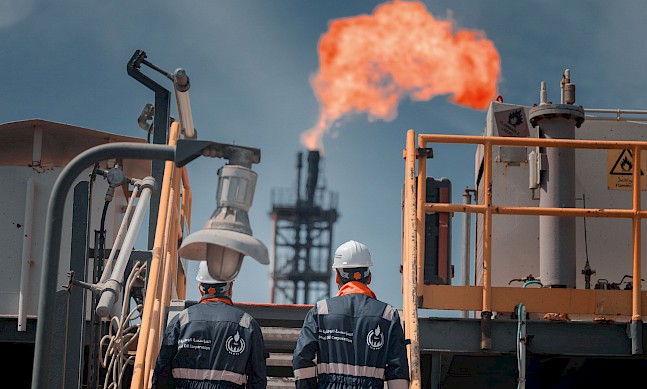
It is a very positive signal. We have seen companies such as Chevron return, alongside major international players including TotalEnergies and Repsol, while new investors such as MOL from Hungary and Turkish Petroleum have also shown interest.
The significance is not simply the individual investments. It is about confidence. The previous major bid round was around 17 years ago, so this latest process represents an important first step in rebuilding international confidence in Libya. Nobody expects international investors to come rushing back overnight. But successful transactions create a track record. They demonstrate that investment can happen, contracts can be negotiated and projects can move forward. That builds confidence for the next round.
Q: Where are you seeing the strongest opportunities?
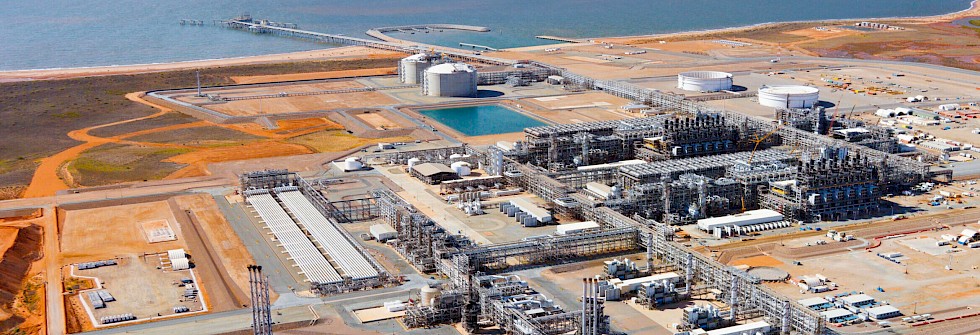
Upstream oil and gas is the most active sector. Libya’s recent exploration bid round attracted major international companies, creating renewed confidence and a stronger investment pipeline.
Beyond hydrocarbons, downstream refining and petrochemicals offer potential, while infrastructure, healthcare, renewable energy, and industrial development could become major growth areas. The objective should be to diversify beyond simply exporting crude oil and gas. Developing downstream industries creates jobs, exports, infrastructure, and additional trade opportunities. That means larger and more sophisticated ports, improved road networks, and broader industrial development. It is all interconnected.
Q: What opportunities do you see in renewable energy and sustainability?
Hydrocarbons remain fundamental to Libya’s economy, but with the global energy transition, we need to think seriously about our future energy mix. Libya has extraordinary advantages. We have some of Africa’s largest oil and gas reserves, but we also have exceptional solar resources. The opportunity to generate renewable energy on a large scale and potentially export it is enormous.
Solar is only part of the picture. There is also potential in green hydrogen and wind energy, as well as interconnection projects linking Libya with nearby markets and potentially Europe. Libya’s geographic position is a major advantage. We are close to markets that need energy, both north toward Europe and south toward Africa. If we develop the necessary infrastructure and attract the right investment, Libya could become an important renewable energy hub.
Q: How can international investors enter Libya?
Investors need realistic expectations and local guidance. Libya’s regulatory, commercial, and legal environment differs from international markets. Eltumi Partners supports clients across the investment lifecycle, from market entry and M&A to licenses, contracts, regulatory approvals, operations, and eventual exit.
Q: What is your message to investors?
Libya has resources, a strategic geographic position, and investment potential. Solar, wind, and green hydrogen could complement hydrocarbons and create new export opportunities. Investors should assess both risks and potential—and speak with people on the ground.
Q: What differentiates Eltumi Partners?
We combine deep Libyan legal knowledge with international transaction experience, helping investors make informed decisions and navigate the process from A to Z.
Q: How has your international career shaped the way you lead Eltumi Partners today?
The first decade or so of my career was spent on the ground in Tripoli, working deeply within the Libyan system and negotiating major transactions with government entities. I worked on landmark transactions, including some of Libya’s first international project financing and ship financing structures. That experience gave me strong local knowledge and a deep understanding of how the system works.
The second phase of my career took me internationally. I joined Hogan Lovells, initially in Dubai and later London, where I worked on complex international transactions and disputes involving Libya. That experience transformed me from someone who primarily understood Libyan law into a more international lawyer.
Working alongside exceptional lawyers from around the world also showed me how a leading international law firm operates: its values, ethics, technology, management systems, and approach to client service. I brought those lessons back when I established Eltumi Partners.
Q: How do you see artificial intelligence changing the legal industry?
There is still considerable uncertainty around what AI can ultimately do and how much value it can create. One immediate challenge is that clients sometimes use tools such as ChatGPT to obtain legal advice and then come to us with conclusions that are simply wrong. Correcting that can take more time than providing the advice properly in the first place.
But from our perspective, AI is a phenomenal opportunity. I don't see it necessarily replacing lawyers. I see it enhancing and optimizing what lawyers do. AI can dramatically reduce the amount of time spent on repetitive and administrative tasks. We are also developing a bespoke AI tool for internal use at the firm. For a Libyan law firm, this is particularly important because there is a natural limit to how many highly specialized lawyers the local market can produce. Technology can help us overcome that capacity ceiling, allowing us to serve more clients, operate more efficiently and diversify our portfolio.