






With the National Oil Corporation (NOC) reporting milestone output of 1,487,723 barrels per day, Chairman Masoud Suleman Mousa discusses the sector’s critical role in Libya’s economy.
Q: How important is the oil and gas sector to Libya?
Libya depends almost entirely on oil and gas. It is the heart of the country. More than 90% of our national income comes from this sector. Maintaining oil production is essential to supporting public finances and government services. This makes our responsibility extremely significant.
Q: What are the biggest financial challenges facing the sector?
A major issue is fuel subsidies. Around 30% to 35% of oil revenues are allocated to fuel subsidies. In addition, Libya applies higher fuel quality specifications than many other countries, which increases fuel import costs.

“We are working with major international companies such as Chevron, Eni, QatarEnergy, BP, and Shell.”
Eng. masoud Suleman Mousa, Chairman of the National Oil Corporation (NOC)
Post ThisQ: What role can international investors play?
We lack sufficient refining capacity. Much of our fuel is imported, and global supply constraints have made it harder to secure enough gasoline and diesel. For example, we need about 16 cargoes monthly but sometimes can secure only 10 to 12.
Foreign investors are essential—not only for capital but also for technology. We are working with major international companies such as Chevron, Eni, QatarEnergy, BP, and Shell. These companies are returning to Libya and beginning new exploration and development activities.
Q: Where do you see the most attractive opportunities?
Brownfield projects are the most immediate opportunity. We offer a model where existing production proceeds remain fully with NOC, while any increase above the baseline is shared with investors. For example, if a field produces 100,000 barrels per day and an investor increases it to 120,000, proceeds from the additional 20,000 barrels are shared.
Q: What role do exploration and gas play in Libya’s future?
Exploration is very promising. Libya has strong geological potential, and our recent success rate is very high—over 90% in some cases. We continue to encourage exploration to replace and grow reserves.
Gas is also very important. We have large, untapped reserves that can meet domestic demand, support electricity generation, and enable exports to Europe.
Q: What are your priorities for infrastructure?
Our infrastructure is aging, with some projects dating back decades. As a result, we are looking at pipeline upgrades, facility rehabilitation, and refinery development. We are working to restart a major refinery project with a capacity of around 220,000 barrels per day, which will reduce fuel imports.
Q: What steps are being taken to improve transparency and investor confidence?
We are now publishing monthly data, including production, revenues, imports, and exports. We are also improving contract terms and fiscal regimes to make Libya more attractive.
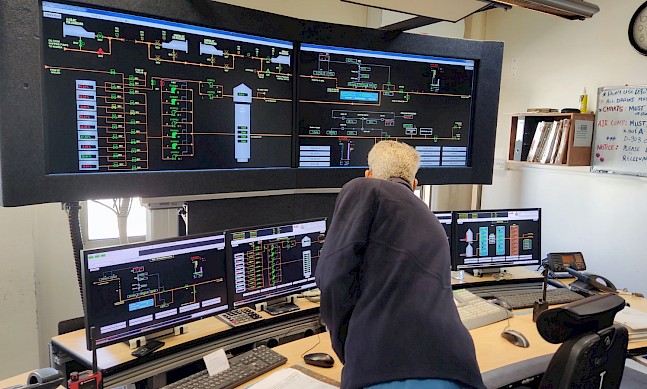
Technology is also improving things. We are implementing digital systems and AI to monitor production in real time. This helps us improve efficiency and decision-making across operations.
Q: What sustainability projects is NOC prioritizing?
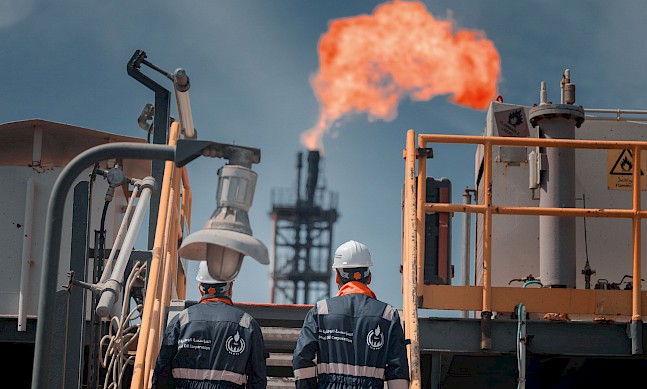
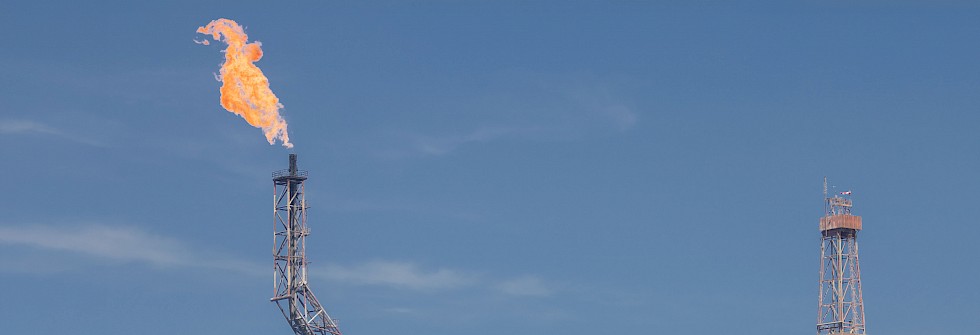
We are working on various incentives, such as treating produced water for reuse, planting over one million trees, developing solar energy projects, and reducing gas flaring, with a target reduction of 60%.
Q: What is your long-term vision for the oil sector?
We have ambitious goals for the sector. Our vision is centered on increasing production to 2 million barrels per day while expanding gas exports. At the same time, we are focused on rebuilding critical infrastructure and deepening partnerships with international companies. Alongside this growth, we are placing greater emphasis on improving sustainability and environmental performance.
Q: Why is now the moment for investors to consider Libya?
Libya’s doors are wide open. We offer a win-win partnership. We have vast untapped resources, and we are committed to improving transparency, stability, and investment conditions.