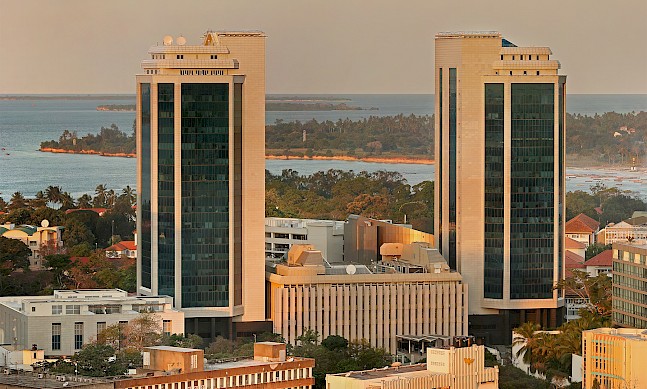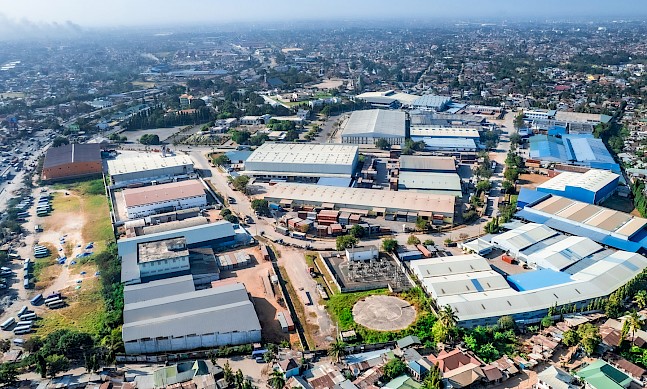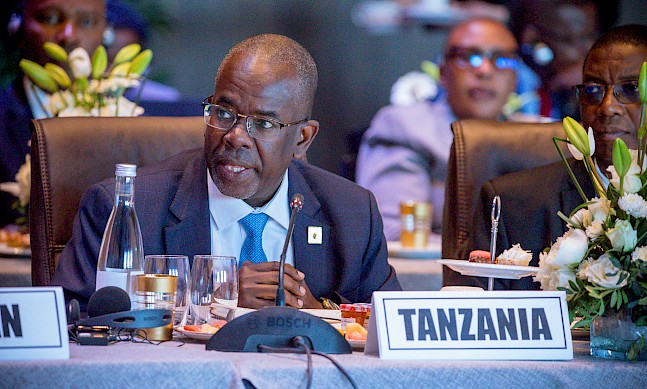









Tanzania is positioning itself as one of East Africa’s most closely watched investment destinations, with a goal of attracting $15 billion in foreign direct investment by 2026 and a growing effort to court U.S. investors. At the center of that push is the Bank of Tanzania, which is responsible for price stability, financial system integrity and the regulatory framework shaping banks, microfinance institutions and payment systems. In this exclusive interview, Governor Emmanuel Mpawe Tutuba discussed how the bank is approaching investor confidence and the development agenda.
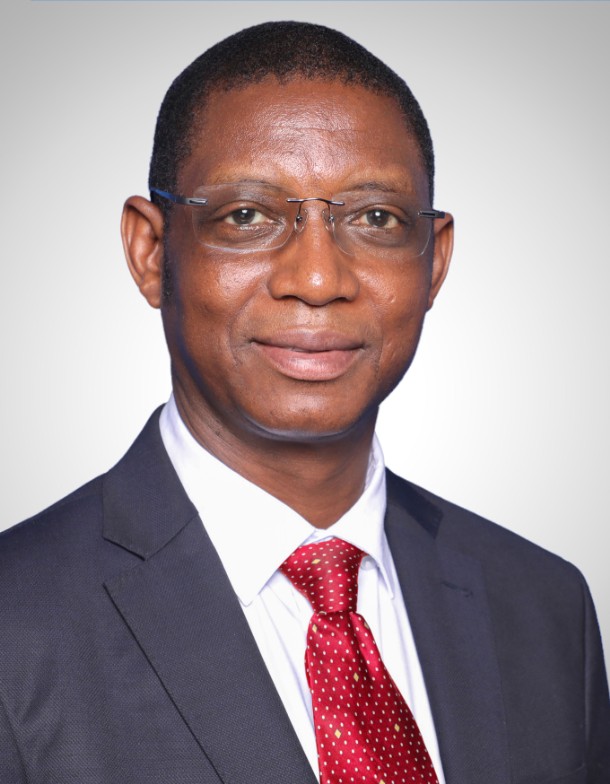
“The banking system is well-capitalized, increasingly innovative and actively engaged in capital markets.”
Emmanuel M. Tutuba Governor, Bank of Tanzania
Post ThisQ: Since your appointment in January 2023, how has your vision evolved?
Emmanuel Mpawe Tutuba, Governor: The Bank of Tanzania operates under a clear statutory mandate – its obligations and core functions are defined in the Bank of Tanzania Act of 2006. When I was appointed, I carried forward the Financial Sector Development Master Plan, a ten-year framework running from 2020 to 2030, which I had helped shape during my time at the Ministry of Finance. That continuity was important.
My overarching vision has been to build a robust, resilient financial system – one in which every bank operates with high compliance, adequate liquidity and low non-performing loans. I tell my colleagues that I want them to experience regulatory peace: an environment where they are properly guided and protected, so they can focus on serving clients without interruption, whether domestically or across borders. The decisions that have defined this tenure have been guided by that principle – keeping the system stable while positioning Tanzania for the growth ahead.
Q: How do you want the bank to be perceived by domestic stakeholders and international partners?
EMT: Tanzania sits at a crossroads of regional integration. We are members of the East African Community, the Southern African Development Community and signatories to the African Continental Free Trade Area – making Tanzania, in a real sense, a gateway to the entire continent. Our credibility is built on that foundation and on a market-based policy framework we have maintained since 1992.
In practical terms, credibility means doing what you say. When we set a growth target of 6% in 2022, our monetary policy stance was calibrated to reach it. When we established a medium-term inflation target of 3 to 5%, we held within that band for more than three consecutive years. We communicate our monetary policy decisions on a quarterly basis – before, during and after – so the public and the market understand our reasoning. Consistency between what we announce and what we deliver is the foundation of trust, and it is what makes Tanzania's financial institutions credible to international partners.
Q: What distinguishes your regulatory approach, and how are you strengthening system-wide financial stability?
EMT: We currently supervise 42 banks – 35 commercial banks, two development banks, two community banks and three microfinance banks – alongside more than 2,600 microfinance institutions. Each tier operates under differentiated capital requirements aligned with Basel 2 and Basel 3 standards.
Core capital thresholds range from 2 billion Tanzanian shillings for community banks, which are confined to a single region, to 200 billion for development banks. These distinctions reflect risk profile, scope of operations and the populations each institution serves.
Our supervision is continuous rather than periodic. Each bank has a dedicated liaison officer within our Financial Sector Supervision Directorate who maintains direct contact and flags issues early.
We conduct targeted examinations on a rolling basis, and our Financial Stability Department runs regular macro-level stress tests to assess system-wide resilience.
For the microfinance segment, we introduced a self-regulatory arrangement – grouping institutions by capital size under two associations, TAMIU and TAMFI – so that sector-level challenges can be resolved internally before escalating. We also launched SEMA NA BoT (which means “talk to Bank of Tanzania”), a digital-based consumer complaints platform that routes grievances directly to our Consumer Protection Department. The system has been instrumental in safeguarding public interests and investor capital at the microfinance level.
Q: What are the drivers of Tanzania’s monetary expansion, with broad money rising from 13.9% to 14.6% and reserves nearing $6 billion, and how are you ensuring it remains productive?
EMT: Our monetary framework is interest-rate based. When we set the central bank rate each quarter, we model the effect on lending, borrowing and interbank activity within a corridor of plus or minus 2 percentage points, ensuring adequate liquidity without fueling inflation. The principle is straightforward: money supply times velocity must align with real economic activity and price stability.
One deliberate structural decision has been to expand credit access for the agricultural sector, which historically has seen low uptake of formal finance. We created a special liquidity window for banks that opened agriculture lending portfolios and reduced the statutory minimum reserve by 1 percentage point for participating institutions, freeing additional funds for deployment to smallholder farmers. The results have been tangible – loan uptake in the sector has increased measurably.
Across the economy, we hold our inflation target at 3 to 5% and design our monetary stance to support growth without compromising that anchor. The reserves position reflects both prudent management and growing investor confidence in Tanzania's policy environment.
Q: What are the drivers behind Tanzania’s $15 billion FDI target, including expected U.S. inflows, and how are you ensuring it is absorbed while maintaining macroeconomic stability?
EMT: Tanzania's new development vision targets a $1 trillion economy – and this is the first year of that journey. We are moving from low-middle-income status toward high-middle-income, and our track record gives us a solid base: real GDP growth of 5.5% in 2022, 6% in 2025 and a projection of 6.3% for 2026, with expectations of exceeding 10% in the medium term.
From the financial sector's side, the banking system is well-capitalized, increasingly innovative and actively engaged in capital markets. We have recently approved green bonds – the first was oversubscribed – and amended our Bank of Tanzania Act to accommodate Islamic banking products. The Zanzibar government's sukuk bond, initially targeting $400 million, was also oversubscribed. Syndicated lending is active among local banks, and institutions are building the capacity to co-invest alongside international partners.
At the structural level, the government has merged the Tanzania Investment Center and the Special Economic Zones Authority into a single entity, TISEZA, creating a one-stop shop for investment registration, land permits, financing access and tax incentives, including zero-duty imports on machinery and equipment. Capital and profit repatriation is unrestricted. The policy environment is predictable, and our regulatory framework meets international standards. For investors who want exposure to a continent-scale market through a stable, well-governed entry point, Tanzania is a compelling case.
Q: How have your past roles shaped your leadership approach at the Bank of Tanzania?
EMT: This is my 32nd year in public service – I began in local government in March 1995 and spent 13 years at that level before moving into the ministries. Working from the grassroots upward gives you something that is hard to acquire any other way: an understanding of how policy decisions land in practice, far from the capital.
My time at the Ministry of Finance was formative in a specific way. When you manage the national budget, you are obliged to scan every sector simultaneously – to understand priorities, constraints and trade-offs across the whole of government. That experience builds a habit of systemic thinking.
It also builds commitment: you understand that your decisions directly determine whether institutions can execute their mandates and deliver results for citizens.
What I carry from those years into this role is a combination of tolerance, patience and high standards. The Bank of Tanzania does not operate in isolation – we are benchmarked against our peers globally, and our actions must meet international standards or risk undermining what we are trying to build. I also believe deeply in succession: my obligation as Governor is not only to lead the institution today, but to develop the next generation of leaders who will take it forward. A strong institution outlasts any individual.