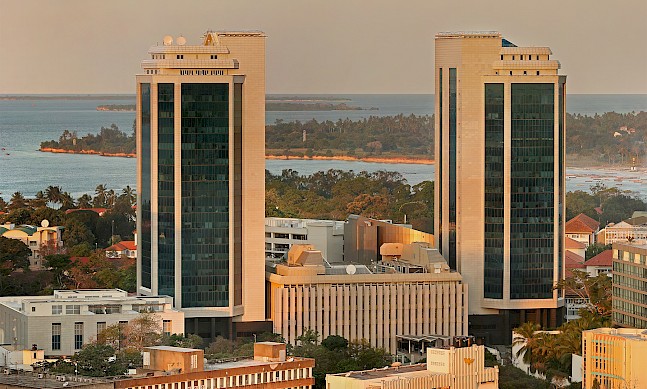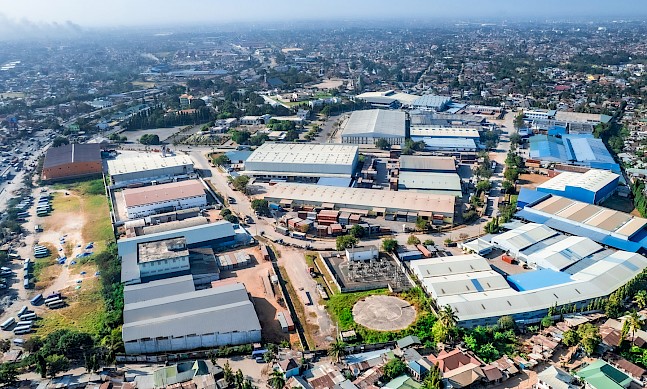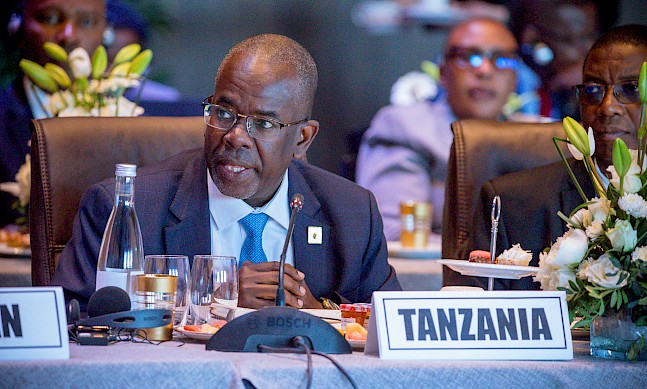









Tanzania is pursuing an ambitious long-term economic transformation, with the financial sector expected to play a central role in supporting investment, fiscal stability, and industrial growth. At the same time, the country is seeking to attract more foreign direct investment, deepen ties with the United States, and strengthen its position as a regional trade and logistics hub. In this exclusive interview, Minister of Finance Khamis Mussa Omar discusses his priorities for the ministry, the role of the banking system, and the opportunities he sees for American investors.
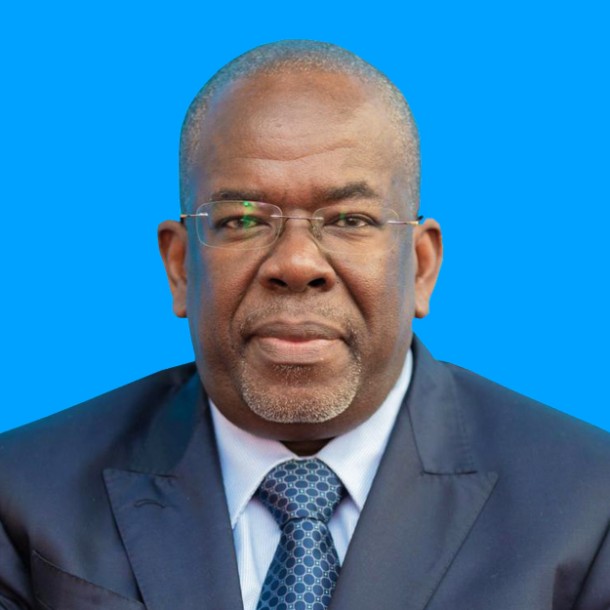
“Between 2025 and 2050, we must transform the economy from just over a $100 billion economy into a $1 trillion economy.”
Hon. Amb. Khamis Mussa Omar Minister of Finance
Post ThisQ: What is your vision for the ministry, and what priorities will define your tenure?
H.E. Khamis Mussa Omar: This ministry is central to the country’s development. The Ministry of Finance sits at the center of national development rather than operating as a single sector.
I would identify three key areas in that vision. First is to continue building a robust financial sector in the country. Second is to ensure that Tanzania has a sound fiscal system. Tanzania is at a crossroads of major transformation, and the country has a very ambitious vision. Between 2025 and 2050, we must transform the economy from just over a $100 billion economy into a $1 trillion economy. This is a major, epochal transformation, and the financial sector will play a critical role in that process.
For me, that means further expansion, broadening, and deepening of the financial sector, while also ensuring that the fiscal system supports greater investment and facilitates government action. That is the vision.
Q: What is the banking sector’s contribution to economic development?
KMO: Within the financial sector, the banking industry has been leading the way. More than 70 percent of Tanzania’s financial sector comes from banking. The sector has also been transforming over the last few decades. Although we would like to see it develop even further, it has remained very strong in terms of asset quality, liquidity in the industry, and intermediation. Still, there is room for improvement.
In intermediation, we have seen a good rise in deposits. When it comes to mobilizing savings, we are performing very well. But the role of the banking industry is not only to mobilize deposits. It is also to lend those funds to investors. That is the intermediation we want to see. Now, there is a disparity: more deposits, less lending. That needs to be improved.
Tanzania’s macroeconomic performance in relation to the financial sector is very impressive. We have seen price stability and very limited market volatility. So, overall, we are doing well. One of the concerns we need to consider going forward is the broader perception of risk, which applies across Africa, including Tanzania. We therefore need to find ways to improve the de-risking of investment in Tanzania.
Q: What are Tanzania’s competitive advantages in attracting FDI?
KMO: Tanzania is a very stable country, before elections, after elections, and generally throughout. It has always been like that. That would be the first factor. I believe any investor wants to go to a country where there is political stability.
Second is our strategic geographic location. Tanzania has the potential to serve as a hub for the entire region. We are members of both the East African Community and the Southern African Development Community, which together account for at least 450 million people in the region. That means you can access this entire market from Tanzania, through maritime, aviation, and surface transport.
Third is a supportive business environment. Tanzania has consistently been reviewing and improving the business environment. We still have areas for improvement. In my recent meetings, especially with members of the diplomatic corps, there were questions about the tax regime. Sometimes, when tax enforcement is strong, people see that negatively in terms of the business environment. But I think we do have a supportive business environment.
Then there is our resource endowment. I mentioned minerals, and we can now see interest from the United States. Tanzania is rich in both arable land and mineral resources. In certain areas, there are still largely untapped opportunities for investment.
There is also human capital. Our population is, by and large, very young and highly trainable. For investors, I think this is an added advantage: labor is competitive in terms of skills and cost.
This is probably part of the broader business environment, but the regulatory framework is also very supportive. The environment is very conducive to investment and highly competitive.
Q: Where do you see the strongest opportunities for U.S. investors in Tanzania?
KMO: The United States has long been a development partner of Tanzania. It has been with Tanzania since the union that created our country in 1964. Among the very early embassies we had across the globe was that of the United States, so the U.S. has always been present.
Over the last 60 years or so, we have also enjoyed very good bilateral relations. By and large, the framework has remained the same, although interests and priorities have evolved over time. In recent years, we have seen a strong mutual understanding. For Tanzania, our foreign policy is centered on economic diplomacy. We are also now hearing the same from the United States: that bilateral and diplomatic relations should culminate in economic gains.
In recent years, we have seen strong interest from the United States in several major projects in Tanzania, including LNG, the Kabanga nickel project, and the Mahenge graphite project. We welcome all these investments because they will further strengthen our ties.
In terms of opportunities, Tanzania is endowed with many advantages. We are strategically located on the Indian Ocean, which creates major opportunities for maritime trade within the region. That also supports aviation and the hospitality industry. In addition, we serve several landlocked countries in the region, so Tanzania also has strong potential as a logistics hub.
We are endowed with natural resources, wildlife, and strong agricultural potential. That means there are opportunities for American investors in industry, agriculture, and mining. At the same time, this investment must also contribute to Tanzania’s industrialization. Whatever arrangement we enter into must be win-win. Both sides must benefit, because a win-lose arrangement is not sustainable. So whatever arrangements we make should ensure that both sides benefit from the cooperation. In terms of opportunities, the sky is the limit.