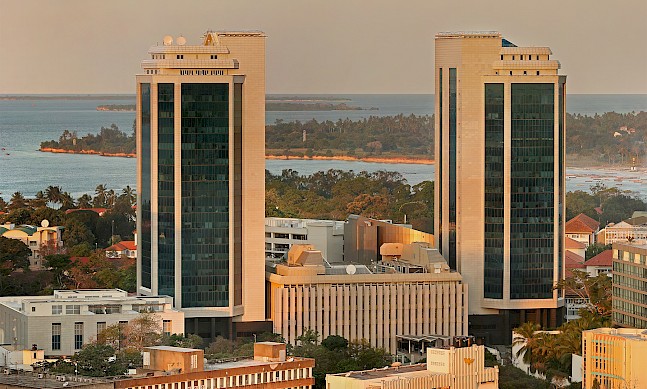








Tanzania’s national investment strategy is becoming more coordinated and explicitly tied to industrial growth. At the center of that effort are two closely linked institutions: the Ministry of State in the President’s Office for Planning and Investment, which is shaping the country’s long-term economic framework, and the Tanzania Investment and Special Economic Zones Authority, or TISEZA, the newly formed agency designed to turn policy into projects. Together, they are positioning Tanzania as a structured investment hub.
The initiative is already beginning to deliver results. According to TISEZA Director General Gilead Teri, Tanzania registered 927 projects worth $11.95 billion in 2025, nearly 28% higher by value than the $9.31 billion recorded in 2024, and more than three times the $3.7 billion recorded in 2021, when the current investment push began.
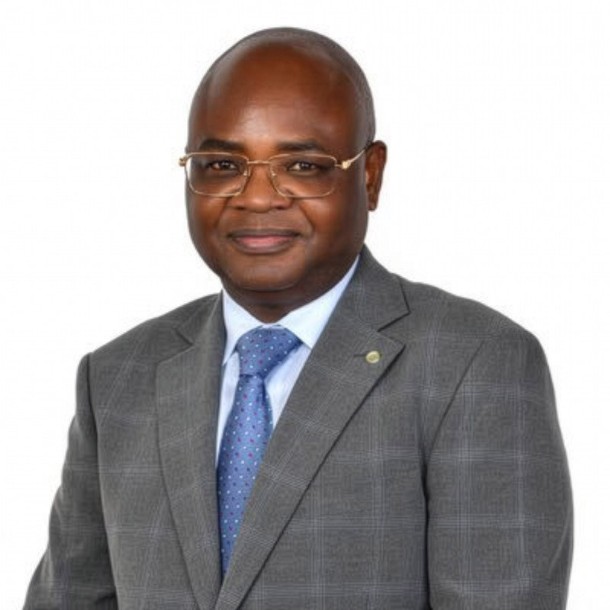
“Our focus is to attract and stimulate investment, both domestic and international.”
Kitila Mkumbo Minister of State in the President's Office, Planning and Investment
Post ThisThe target from 2026 onward is $15 billion in annual foreign direct investment. While the ministry is defining the strategy, TISEZA is designed to be the delivery vehicle. The authority was created after the merger of the Tanzania Investment Centre and the Export Processing Zones Authority, bringing investment promotion and special economic zones under one roof. Teri describes that consolidation as a structural shift meant to reduce friction for investors and make Tanzania easier to navigate. “For us, the number one mandate is to become a one-stop center where all investors who come into Tanzania get served and get supported,” he says.
TISEZA now houses 16 government agencies under one roof and has also digitized key services, allowing investors to register companies, obtain investment certificates, secure land designations, and move through permitting at much greater speed. The broader goal is to make the institution the primary gateway for investors across both domestic-market and export-oriented projects.
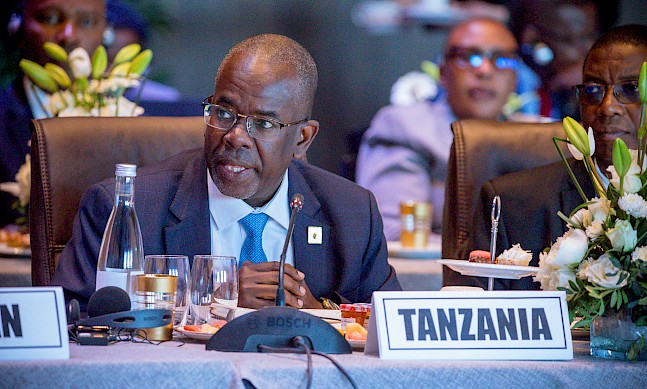
For Kitila Mkumbo, Minister of State in the President's Office for Planning and Investment, the investment agenda sits inside a much broader national project. The office has been leading work on Tanzania’s Vision 2050, or Dira 2050, alongside a new five-year development plan that will run through 2030–2031. The aim is not only to raise capital, but to direct it toward economic transformation. “We have a National Investment Policy and investment legislation that guides the framework,” he says. “Our focus is to attract and stimulate investment, both domestic and international.”
That ambition is tied to a striking long-range goal. Tanzania aims to become a $1 trillion economy by 2050, and officials are steering investors toward sectors they believe can move the country beyond raw commodity exports and into higher-value production. Agriculture, mining, technology, finance, infrastructure, and construction all feature prominently in that strategy.

“For us, the number one mandate is to become a one-stop center where all investors who come into Tanzania get served and get supported,”
Gilead J. Teri Director General of TISEZA
Post ThisMkumbo makes the case that Tanzania’s size and resource base give it unusual room to scale. He points to 44 million hectares of arable land, much of it still underutilized, as well as the country’s potential in critical minerals. But the emphasis is not simply on extraction. “We would be pleased to develop battery manufacturing in Tanzania so we can export batteries rather than exporting minerals in raw form,” he says.
That emphasis on value addition runs through the government’s message. Mkumbo says Tanzania wants investors who process, manufacture, and build local industrial capacity, rather than simply sourcing raw materials. “We want a win-win approach,” he says. “Investors benefit, and Tanzania benefits through employment creation, a stronger export portfolio, and the revenue the government needs for national development.”
The U.S. already plays an important role in that story. Mkumbo describes the country as one of Tanzania’s top five investors and points to American involvement in major projects including liquefied natural gas (LNG), nickel, and graphite. On the long-discussed LNG project, he says, “We have finalized negotiations and completed the commercial deals.” He adds that the $42 billion project is now nearing implementation, pending final legal work.
That diversity in resources is reinforced by geography, with Tanzania’s ports and transport corridors offering a route to wider markets. “Tanzania provides a gateway to regional markets, including access to more than one billion consumers across the African continent,” Mkumbo says.
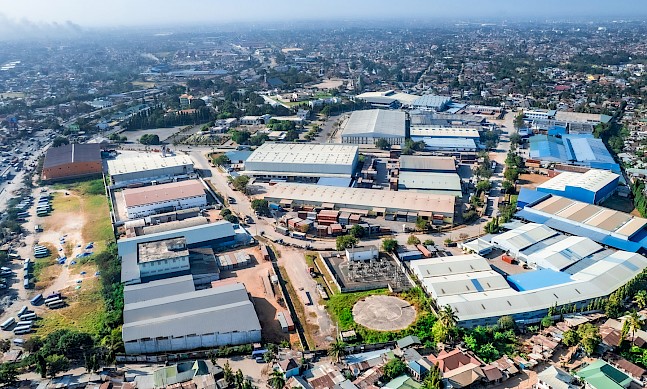
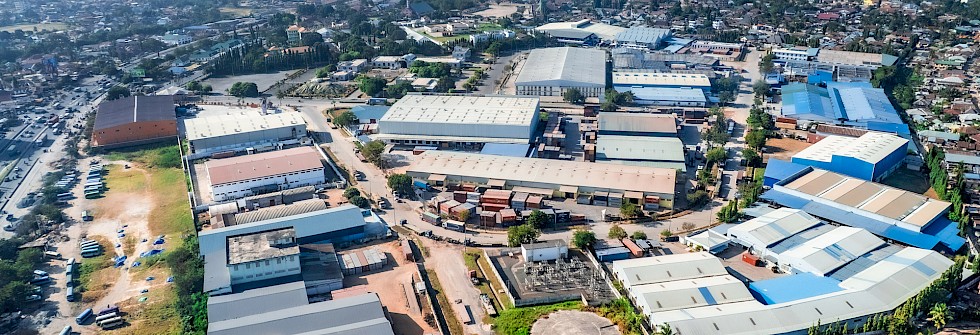
Special economic zones are a central part of that regional strategy. Teri says recently launched zones, including sites in Bagamoyo and Dodoma, are being designed to serve both the Tanzanian market and export markets beyond East Africa. In Bagamoyo, he says, early tenants already include auto assembly, steel, technology, youth-focused industrial facilities, and clean cooking infrastructure.
The nation’s investment appeal is now supported by a government that aims to align policy, logistics, incentives, and industrial land into a coherent offering. “We are building a conducive investment environment, and the President is pro-business and focused on supporting industry,” Mkumbo says. “Tanzania offers a strong investment environment, and we welcome our friends from the United States.”